Home » Best cheap men’s hill walking boots for 2026
Good men’s hill walking boots do not have to cost a fortune. If you mostly stick to British hills, waymarked trails and weekend rambles, a well-chosen budget pair can give you the grip, support and weather protection you need without draining your kit budget.
Here we focus on the cheaper end of the Go Outdoors range for men’s hill walking boots in 2026, highlighting models that keep costs down while still feeling dependable underfoot. You will not get every premium feature at these prices, but you should expect boots that are comfortable enough for half‑day walks and robust enough for typical UK conditions.
We have narrowed things down to a small, carefully chosen list so you can quickly compare the best-value options. Some of these are the absolute lowest priced, while others cost a fraction more but may be worth it for better comfort or durability over time.
These recommendations are based on the details that matter for real-world walking, not just the lowest ticket price. We look closely at design, materials and how each boot is likely to cope with typical UK hill walking, from wet fields to stony paths.
We also pay attention to brand track record and the kind of feature set you are getting for your money. The goal is to steer you towards boots that feel like a smart purchase, not a false economy that leaves your feet sore or lets in water at the first puddle.
That means some slightly more expensive budget options make the cut if they offer noticeably better comfort, support or weather protection for just a few pounds more than the very cheapest boot on the shelf.
We started by focusing on the lower price brackets within men’s hill walking boots at Go Outdoors, shortlisting models that undercut typical mid-range hiking boots. From there we filtered for designs that offer sensible support, a reasonably grippy sole and at least basic weather resistance so they feel fit for purpose on UK hills.
Any boot that clearly cuts too many corners in construction, or looks more like a fashion trainer than functional trail footwear, was set aside. Within the remaining options we compared how each model balances cost against likely performance and comfort, weighing up things like ankle height, midsole cushioning and overall build.
We then selected a spread of boots that cover slightly different priorities: some focus on keeping the upfront cost as low as possible, while others sit at the upper end of the budget bracket but may save you money long term by lasting longer or feeling better on longer walks.
The end result is a compact list of cheap men’s hill walking boots that still look like sound choices for everyday walkers, newcomers to hiking and anyone kitting out on a strict budget.
All of the boots below sit firmly in the budget camp, but each brings something a little different to the table. Some are simple, no‑nonsense options that keep you comfortable on shorter walks for the lowest possible price, while others add a touch more cushioning or weather protection for only a small step up in cost.
Use the summaries to decide whether you want the absolute cheapest pair that will do the job, or if it is worth stretching a little for extra comfort and durability that could pay off over many miles.

A straightforward, great-value mid-height walking boot that gets you out on the hills for about as little as possible. Ideal if you want a basic, dependable boot for occasional walks without spending big.
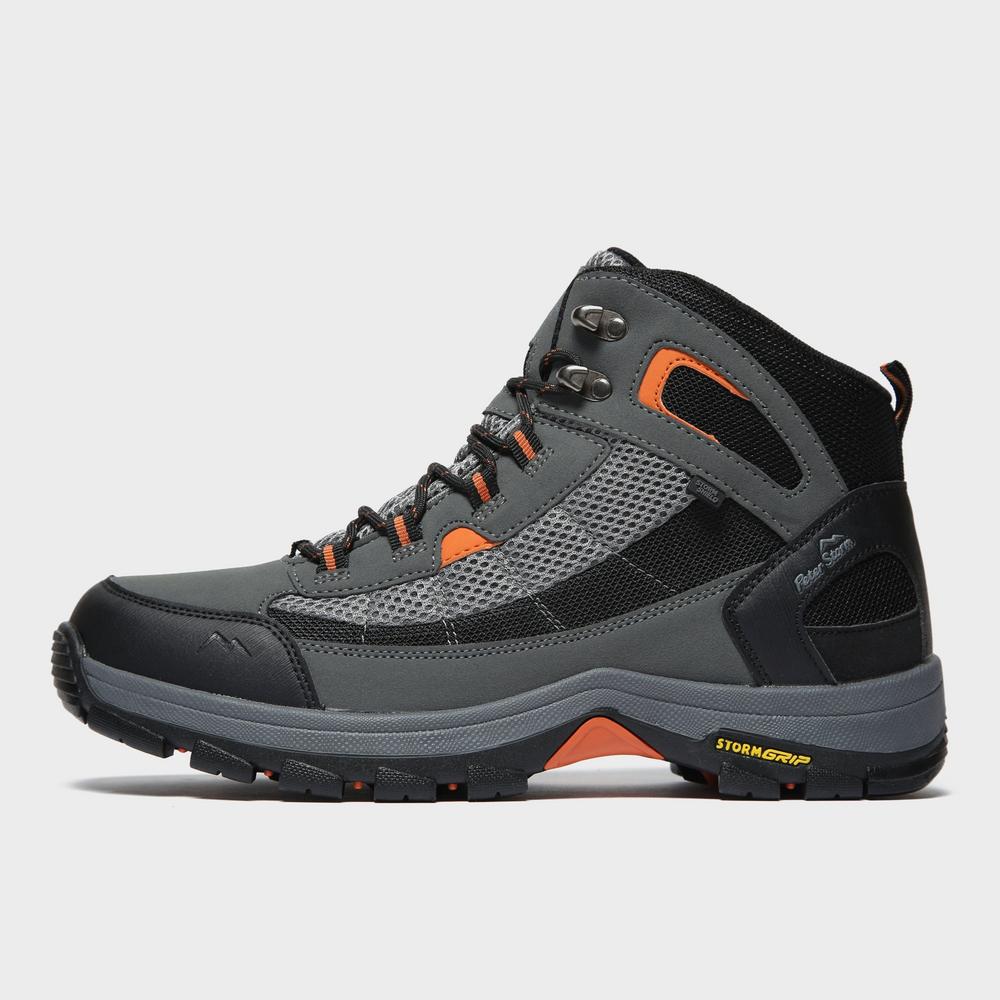
The Peter Storm Men’s Filey Mid Walking Boots are among the cheapest ways to get a proper walking boot on your feet, yet they still offer the ankle coverage and support you want for uneven trails. The mid-height cut helps protect against knocks and keeps out debris better than a low trainer, which is reassuring when you are new to hill walking. At this price you can confidently kit yourself out for weekend rambles, dog walks and light hill days without worrying too much about scuffing them up. For occasional walkers or those buying their first boots, they represent an accessible starting point that still feels like real hiking footwear rather than a casual shoe.
As one of the cheapest options, the Filey Mid is likely to use more basic materials and will not feel as refined or long-lasting as a premium boot. You should not expect top-tier cushioning or advanced waterproof technology, so they are best kept for fair to mixed weather and moderate distances. If you walk in very wet conditions or spend long days in the hills, it may be worth stretching to one of the waterproof models further down this list.
Ideal for new walkers, students and anyone kitting out on a shoestring who still wants a proper mid-height walking boot. If your plans mostly involve country parks, canal paths and occasional forays onto lower hills, the Filey Mid gets you started for minimal outlay. It also suits dog owners who want something more supportive than trainers for daily muddy walks without worrying about wrecking expensive boots.

A budget-friendly waterproof mid shoe that blends trainer-like feel with the extra protection of a boot. A strong choice if you walk in wet British weather but need to keep costs tightly controlled.
The Peter Storm Men’s Force Waterproof Mid Walking Shoes bring waterproof protection into the mix while staying firmly in the cheap bracket, which is a big plus for typical UK walking where showers are almost guaranteed. The mid-cut design gives you a bit more freedom of movement than a full boot but better stability than a low shoe, making them a good in-between for mixed trail and town use. Because they are built as a mid shoe, they often feel lighter and more agile underfoot than bulkier budget boots, which helps reduce fatigue on longer walks. For the money, getting that blend of waterproofing, versatility and everyday comfort is impressive.
Being a budget waterproof boot, the Force Mid is unlikely to match the breathability of more expensive membranes, so your feet may feel warm on hot days or fast-paced walks. The mid-shoe design, while versatile, will not offer as much ankle bracing as a taller hill boot on very rough, steep ground. Heavy, frequent use on demanding terrain could also highlight the limitations of the cheaper construction over time.
Best suited to walkers who expect rain and puddles but prefer a lighter, more agile feel than a chunky leather boot. If your typical outings switch between town pavements, woodland paths and low hills, the Force Waterproof Mid Walking Shoes offer a versatile and affordable solution. They are also a smart pick if you want one pair of boots that can handle both everyday wear and occasional hill trips.

A waterproof mid boot that nudges the price up slightly but aims to repay that with added versatility and comfort. Suits walkers who get out regularly and want a bit more boot for only a few extra pounds.
The Peter Storm Men’s Buxton Waterproof Mid Walking Boot steps the price up slightly from the very cheapest options but gives you a more rounded hill-walking package. The waterproof construction is designed to cope with typical British dampness, so you can head out on wet paths and dewy fields with more confidence. The mid-height ankle support is reassuring on rougher ground, making the Buxton feel more like a true hill boot than a casual shoe. For a modest extra outlay, you get a boot that is better suited to regular use and more varied terrain, which can work out cheaper in the long run if you walk frequently.
Although still inexpensive, the Buxton does cost more than the absolute rock-bottom options, so ultra-tight budgets might push you towards the Filey or Force instead. As a budget waterproof boot, you should not expect it to shrug off endless bog-trotting or full winter conditions like a specialist boot. If you mainly stroll on easy paths, some of its added capability may be more than you strictly need.
A strong choice for regular walkers who get out most weekends and want a waterproof boot that can handle a mix of trails, hills and countryside without breaking the bank. If you are happy to spend a little more than the bare minimum for something that should feel better over distance, the Buxton is worth a look. It is well suited to people progressing from easy walks to more varied terrain who want a boot that can grow with their ambitions.

Solid, no-frills walking boots for men who want reassurance on muddier, rockier trails without straying into premium prices. A dependable partner for steady hill days and weekend walks.
The Peter Storm Men’s Rivelin Walking Boots are pitched squarely at walkers who want a dependable, traditional boot feel without paying for high-end technical features. The design prioritises support and stability, which inspires confidence when you are picking your way along muddy paths or stony tracks. As a budget-friendly option, they give you a solid platform for hill days, short hikes and everyday countryside use without worrying too much about wear and tear. They are the sort of boots you can happily leave by the door and grab for everything from local footpaths to easier hill routes.
The Rivelin is a straightforward, budget boot, so it is unlikely to feel as light, cushioned or breathable as pricier hill-walking footwear. If you regularly tackle long mountain days or carry a heavy pack, you may find its support and comfort reach their limits. The traditional feel may also feel a little clumpy compared with more modern, trainer-like designs.
Well suited to men who like traditional walking boots and want something dependable for modest hill days, national park trips and general countryside exploring. If you walk a fair bit but rarely push into serious mountain terrain, the Rivelin offers a sensible middle ground between price and everyday support. It is also a good option if you want a boot you are happy to get muddy and scuffed without worrying about expensive kit.

A slightly more expensive budget option that leans into cushioning and comfort while still undercutting many mid-range boots. Good for walkers who value all‑day comfort over shaving every last pound off the price.
The Peter Storm Men’s Camborne Mid Walking Boots sit at the top of this cheap line-up but still represent strong value given the comfort-focused design. The mid-height cut offers supportive coverage while allowing decent ankle movement, which is welcome on longer walks. At this price point, you are paying a little more for a boot that aims to feel softer and more forgiving underfoot than the very cheapest models, which can make a huge difference over several hours on the trail. For anyone with slightly fussier feet, that extra comfort can be money well spent while still keeping the overall boot budget sensible.
Even though the Camborne is still a budget option, it is the priciest on this cheap list, so pure bargain hunters might not see it as the best value. Comfort-focused construction can sometimes mean a slightly softer feel that is less precise on very technical ground. If you only walk occasionally on short, easy routes, you may not fully benefit from the extra comfort you are paying for.
A good fit for walkers who care about comfort over long periods and are willing to nudge the budget up slightly to get it, without entering true mid-range pricing. If you have slightly sensitive feet, are returning to walking after a break or simply spend a lot of time on your feet outdoors, the Camborne Mid is likely to appeal. It is also a solid choice for people who do regular weekend walks and want one comfortable, do‑it‑all boot that still feels like a bargain.