Home » Best cheap rucksacks worth buying in 2026
A good rucksack can make the difference between an enjoyable day on the hill and a slog you cannot wait to end. The challenge is finding one that does the job without blowing your budget.
For 2026 we have picked out some of the best cheap rucksacks available at Go Outdoors, focusing on packs that keep costs down but still feel dependable and comfortable in real use. They are ideal for DofE, first backpacking trips, weekend adventures and general travel.
You will see a mix of capacities here, from mid-sized packs for lighter loads to big expedition-ready bags. The very cheapest options keep things simple, while those that cost a little more add extra comfort and features for only a modest bump in price.
These recommendations are based on a close look at each pack’s capacity, design and price, rather than just hunting for the lowest number on the shelf. We look for rucksacks that offer sensible features for walkers and backpackers, with enough comfort and practicality to justify your money.
We also pay attention to brand track record and how similar models have performed for owners over time. The idea is to highlight rucksacks that feel like smart, good-value buys rather than false economies that will let you down once you start using them properly.
By weighing up load-carrying potential, pack layout and likely durability alongside price, we aim to guide you towards cheap rucksacks that still feel ready for real-world adventures.
We started by looking at some of the lowest priced rucksacks in the Go Outdoors range that still offer trekking-style capacities and features. From there, we filtered out options that felt too compromised in terms of size, usability or brand confidence, even if the price looked tempting.
The aim was to find a balance between affordability and real-world performance. That means focusing on packs with sensible litre capacities for walking and travel, straightforward back systems and simple but useful storage, rather than overcomplicated features you are unlikely to use.
We also ensured there is a spread of sizes, from around 40 litres up to big 85 litre expedition-style rucksacks, so you can choose a pack that matches how much kit you actually carry. All of them are cheaper options in their class, but each earns a place because it still looks like a pack you would be happy to rely on out on the trail.
Below you will find our top cheap rucksack picks for 2026, all available from Go Outdoors. Each offers solid value at the lower end of the price range, with sensible capacities for real trips.
Some are among the very cheapest large packs you can buy, while others cost a little more but give you extra carrying comfort or capacity for only a small step up in spend. Pick the one that best matches your usual load and how often you plan to be out.

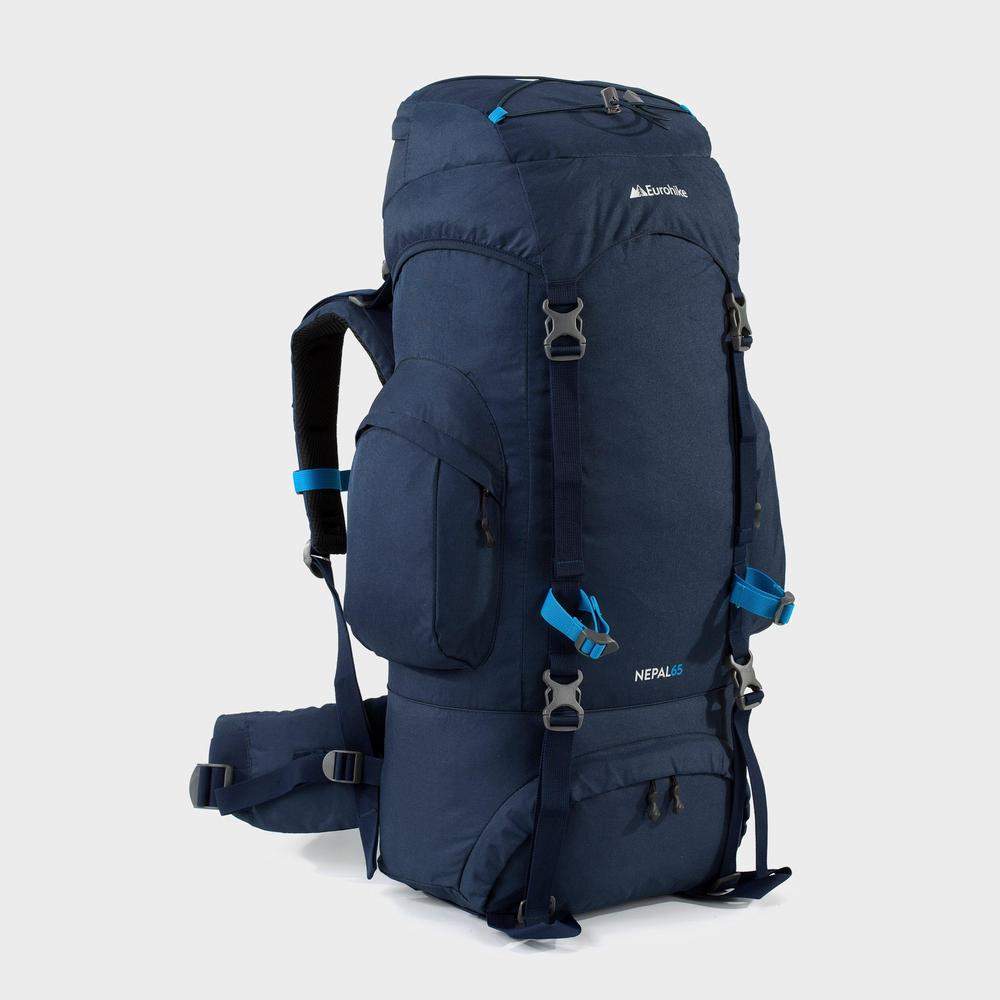
A very affordable 65 litre trekking rucksack that gives you proper multi-day capacity without a premium price tag, ideal for DofE and first backpacking trips.
At around 65 litres, the Eurohike Nepal 65 strikes a sweet spot between capacity and bulk, giving you enough room for multi-day trips, DofE expeditions or hut-to-hut walking without becoming unmanageably large. The low price makes it a very accessible way into backpacking, especially for students or those kitting out for their first big trip. The simple trekking shape should make packing straightforward, and 65 litres is forgiving if your kit is not yet ultralight or perfectly organised. For the money, it is a practical, no-nonsense pack that lets you get out on the trail without overthinking your gear.
As a budget pack, the Nepal 65 is unlikely to match the fine-tuned comfort, ventilation or adjustability of more expensive trekking rucksacks. Heavier fabrics and simpler hardware can also mean a bit more overall weight. If you regularly carry very heavy loads or trek for many days in a row, you might appreciate the extra support and durability of a pricier model.
The Eurohike Nepal 65 is ideal for students, Duke of Edinburgh participants and first-time backpackers who want a genuinely trip-ready capacity at a low price. It suits multi-day UK treks, hostel-to-hostel journeys and general travel where you want one bag that can do a bit of everything. If you are unsure what size to buy and want something that will cover most adventures, this is a very safe and affordable starting point.

A compact and cheap 40 litre rucksack that suits day hikes, light overnighters and travel when you want to keep both weight and cost under control.
With a 40 litre capacity, the Eurohike Tibet 40 is a versatile choice for long day hikes, overnight bothy trips and lightweight weekends away. Its relatively small size keeps the weight and bulk down, which is especially helpful if you are a smaller walker or simply prefer travelling light. The price remains firmly in the budget bracket, so it is a low-risk way to upgrade from a basic daypack to something more trekking oriented. For occasional backpackers, it is easier to store and carry than a large expedition pack, yet still roomy enough if you pack sensibly.
At 40 litres, the Tibet 40 will feel tight if you like to carry lots of spare clothing or bulkier camping gear, especially in colder months. Its budget positioning suggests a simpler back system, which may not be as comfortable as premium packs when fully loaded. If you expect to grow into longer multi-day trips or heavier loads, you might outgrow this capacity relatively quickly.
Choose the Eurohike Tibet 40 if you mostly head out on day hikes, weekend city breaks or the odd lightweight overnight trip and prefer to travel with a compact pack. It is a good option for smaller or younger walkers who do not want to be overwhelmed by a huge rucksack. If you are upgrading from a simple school-style backpack and want something more outdoors-ready without spending much, this is a strong candidate.

An 85 litre budget workhorse aimed at big-load adventures, offering masses of space for expeditions or longer trips at a very wallet-friendly price.
The Eurohike Nepal 85L Rucksack gives you a huge amount of carrying space for a very modest outlay, which is rare at this capacity. At 85 litres it can swallow bulky sleeping bags, winter layers and group kit, making it a handy option for longer adventures or trips where you have to carry everything. The simple trekking design should make it straightforward to pack and organise, and at this price it is attractive for those who need big capacity only occasionally and do not want to invest in a top-end expedition pack. For infrequent but gear-heavy trips, it offers a lot of litres per pound spent.
The big 85 litre capacity can be a double-edged sword, as it encourages you to pack more than you really need, which in turn makes the load harder to carry. As a cheaper model, it is also unlikely to have the most sophisticated harness or load transfer, so fully stuffed it may feel unwieldy compared with a premium expedition pack. It is best suited to occasional big-load use rather than constant, heavy-duty expeditions.
The Eurohike Nepal 85L is best for those who know they need serious capacity on a tight budget, such as gap year travellers, leaders carrying group kit or anyone planning long, gear-heavy trips. It also suits winter camping when bulkier sleeping bags and clothing quickly eat into pack space. If you are cost-conscious but occasionally need to haul a lot of equipment, this is one of the most affordable ways to do it.

The same generous 85 litre Nepal pack in an olive colourway, giving you the same budget expedition capacity with a different look.
This olive version of the Eurohike Nepal 85L offers the same expansive capacity and budget-friendly appeal as the black model, but with a more understated, outdoorsy look. All the advantages of a large 85 litre pack apply here: plenty of space for winter kit, extended trips or carrying additional gear for others in your group. Because it sits at the same low price point, it remains one of the most accessible ways to pick up a true expedition-sized rucksack without stretching your finances. If you prefer a more natural colour and still want maximum capacity, it is an appealing alternative.
Apart from the colour, this olive Nepal 85L offers little to distinguish it from the black version, so the choice is largely aesthetic rather than functional. The same caveats apply: the huge capacity can lead to overpacking, and the budget-level back system may struggle to keep very heavy loads feeling comfortable over long distances. If you rarely need 85 litres, a smaller pack could be a more versatile buy.
Pick the olive Eurohike Nepal 85L if you like the idea of a big expedition-sized pack but prefer a more muted, natural colour than plain black. It is suited to the same kind of trips as the black version: extended journeys, winter routes and situations where you carry extra kit for others. If style matters a little as well as price and capacity, this version will appeal.

A 65 litre Vango trekking pack that costs more than the very cheapest options but offers a more refined carry for longer days and heavier loads.
The Vango Contour 65 Rucksack steps things up in terms of brand pedigree and likely carrying comfort while still staying relatively affordable. With 65 litres of space, it is well suited to multi-day treks and DofE expeditions where you have to carry camping kit, spare clothing and food. Vango has a strong reputation in trekking packs, so you can reasonably expect a more refined back system and harness than on the very cheapest models, which pays off on longer days. For a modest increase in price, you are likely getting a pack that will feel better on the shoulders and hips when fully loaded.
The Contour 65 is notably more expensive than the Eurohike packs on this list, so it is not the absolute cheapest way to get a large trekking rucksack. While you are likely paying for better comfort and design, those on a very tight budget may struggle to justify the extra cost if they only go backpacking once or twice a year. If you never carry heavy loads or walk long days, some of the cheaper options may still serve you well enough.
The Vango Contour 65 is ideal for regular trekkers, DofE participants and backpackers who will be carrying decent loads and value comfort but still need to watch what they spend. It works well for multi-day UK trails, overseas trekking holidays and longer trips where the pack will be on your back for hours at a time. If you can stretch beyond the very cheapest options, this is a sensible step up that should feel better over the long haul.