Home » Best cheap tech cables for camping in 2026
When you are packing for a camping trip, a few reliable charging cables are just as important as your tent and stove. The good news is that you do not need to spend a fortune to keep your phone, power bank and headtorch topped up.
Here we have picked some of the cheapest tech accessories in 2026 that still feel sensible to rely on. The focus is on simple, budget-friendly charging cables that give you enough length around the campsite, with connectors to suit a range of devices.
These are all low-cost options, but not throwaway tat. Each one has clear strengths and a few trade-offs, so you can choose whether you want the most robust cable, the most versatile connector setup or just the simplest cheap spare for your kit bag.
Our recommendations are based on the same approach we use for bigger-ticket camping gear: we look closely at the specifications, the connector types and the practical details that actually matter outdoors. Price is important, but it is not the only thing we look at.
We prioritise cables that balance low cost with everyday usability, such as longer lengths for reaching across a tent, braided outers for durability and connector options that work with common phones, tablets and power banks. We also pay attention to brand reputation and owner feedback where it is available, so we are not pushing the absolute cheapest option if it is likely to fail early.
The aim is to highlight affordable tech accessories that feel like a smart, low-risk purchase rather than a false economy, giving you more confidence that your devices will stay powered throughout your trip.
We started by focusing on the most affordable tech accessories relevant to camping: simple charging leads that keep phones, power banks and small gadgets running. From the cheaper end of the range we filtered out anything that looked overly flimsy or lacked the basics you need for regular outdoor use.
Connector type was a big factor, as more people now carry USB-C devices, while plenty still rely on older Lightning or multi-connector setups. We favoured cables that either cover the most common modern standards or offer maximum flexibility from a single lead.
We also considered real-world camping scenarios. Longer cables are more useful in a tent, while braided designs stand up better to life in a rucksack or glovebox. Where there were similar-price options, we picked the ones that offer a bit more durability, reach or versatility for only a few pounds.
All of these picks are firmly in the budget category, but they have enough quality in the build and design to make them worth packing for weekends away and family holidays.
Below you will find our top cheap cable picks for 2026, all from the value-focused Status range. They cover USB-C, Lightning-style 8-pin and a handy multi-lead option, so you can match your cable to your phone, tablet and power bank without overspending.
Some are simple single-connector leads that keep costs as low as possible, while others offer a bit more versatility or ruggedness for not much extra. Pick the one that best fits the devices you own and how you like to camp.

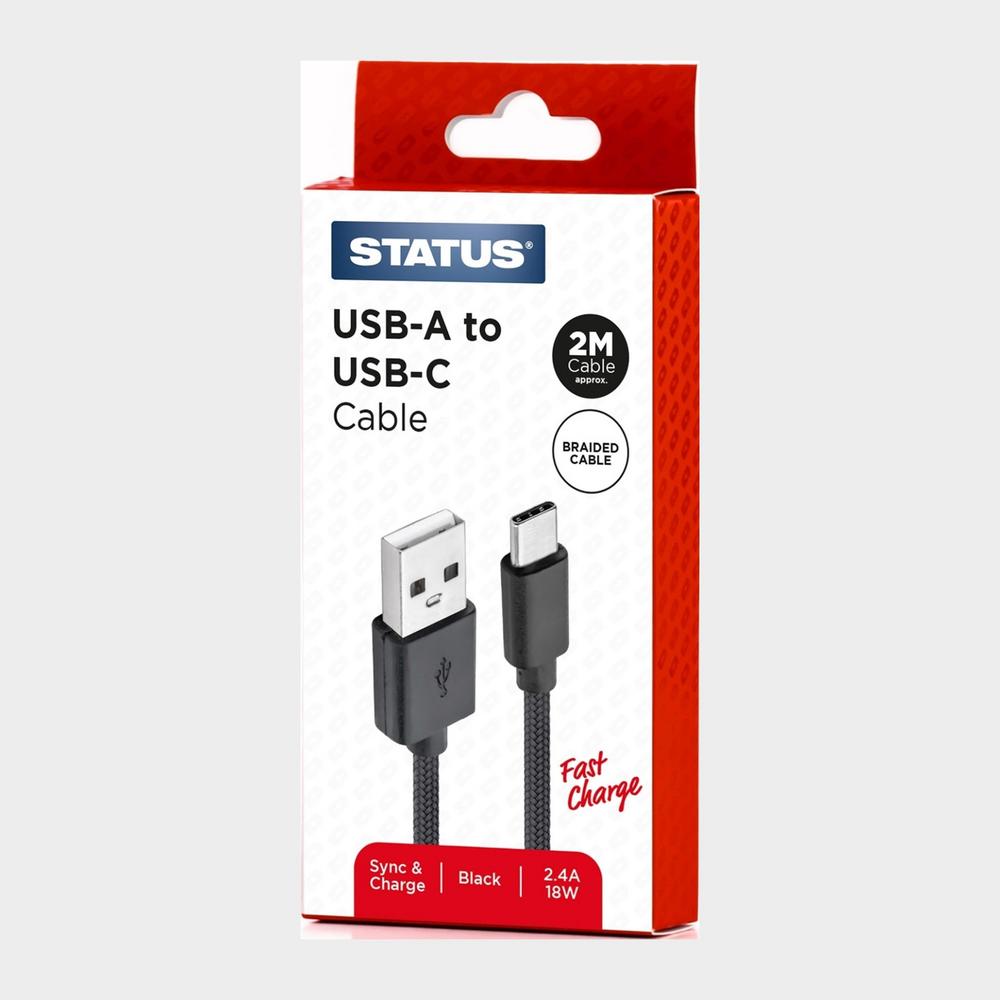
A simple, great-value USB-A to USB-C cable with a generous 2m length and a braided outer, ideal as your main camping and travel lead for modern devices.
At around a tenner, this braided USB-A to USB-C cable hits a very attractive sweet spot between price and practicality. The 2m length makes it far more useful around the campsite than a short lead, letting you plug into a power bank or hook-up socket and still use your phone in your sleeping bag or camp chair. The braided outer should cope better with being thrown into rucksacks, car doors and gear boxes than thinner, plastic-only options. With USB-C becoming the norm on modern Android phones, tablets and many power banks, this single affordable cable will cover most people’s main devices.
As a USB-A to USB-C cable, you still rely on older style USB-A outputs on plugs and power banks, so it is not as future-proof as a pure USB-C to USB-C setup. You are unlikely to get the very fastest charging speeds available from premium, high-spec cables. There are also no colour or length options if you prefer shorter leads for everyday use.
This cable is ideal if you want one cheap, dependable lead to live in your camping kit or car without worrying too much if it gets bashed about. It suits campers with mainly USB-C phones and gadgets who still have older USB-A chargers and power banks. If you are setting up a family charging corner in a tent or awning, the extra length and braided finish make this a very practical main cable.

A no-nonsense 2m USB-C to USB-C braided cable that suits newer phones, tablets and power banks, giving you extra reach in tents and campervans for a low price.
This 2m USB-C to USB-C braided cable is a strong budget choice if you have moved fully to USB-C chargers and devices. The longer length makes it much easier to run power across a tent or from a floor socket in a hostel or campervan to where you actually want to use your phone or tablet. The braided outer should add a bit of toughness compared with slim PVC leads, helping it survive repeated packing and unpacking. For the price, it gives you a tidy way to modernise your charging setup without spending on pricier branded cables.
Being USB-C to USB-C only, it is not compatible with older USB-A power banks or wall plugs, so you may still need an adapter or a second cable if your kit is mixed. As a budget model, it may not support the very highest charging speeds that premium fast-charge cables can handle, which matters mainly to power users.
Choose this if you have a newer USB-C charger or power bank and mainly use modern Android phones, tablets or USB-C accessories. It is well suited to campers who want a simple, future-friendly cable with extra reach for use in tents, campervans or holiday cottages. It also works nicely as a dedicated travel cable you can leave in your rucksack year-round.

A 2m braided USB-A to 8-pin cable that is a solid budget choice if you still run Lightning-style devices and want more durability than a basic PVC lead.
This braided 2m USB-A to 8-pin cable is a sensible budget pick if you are still running older Lightning-style devices and want something tougher than the flimsy leads that often come in the box. The extended length is a real bonus on campsites, letting you keep your device within easy reach even if the socket is awkwardly placed in a hook-up post or further down the tent. The braided finish should improve resistance to fraying and splitting, particularly at the ends, making it a better long-term bet than many bargain PVC alternatives. At this price, it is a cost-effective way to keep an ageing but still perfectly serviceable device going.
Because it uses the older 8-pin style connector, it is less future-proof than USB-C options and only suits specific devices. Charging speeds are likely to reflect what your older device can handle, so it will not magically speed things up compared with a more premium cable.
This cable is ideal for campers who still rely on older iPhones or tablets but do not want to spend big money on official accessories. It is a good choice as a dedicated camping or travel lead, meaning your more expensive cable can stay safely at home. If you frequently charge your device while using it in bed or around a campsite, the combination of extra length and braided protection makes it particularly appealing.

A straightforward 1m USB-A to 8-pin cable that keeps costs and bulk down, working well as a neat everyday or power bank lead for older Apple devices.
This 1m USB-A to 8-pin cable keeps things simple and compact, which is handy if you mostly charge from a nearby power bank or bedside socket rather than across a large tent. The shorter length makes it easier to pack into a small organiser or pocket and keeps cable clutter under control. At this low price it is an easy extra to add to your camping kit, giving you a dedicated lead that can stay in your rucksack or glovebox.
At only 1m, it lacks the reach of the 2m braided options, which can be frustrating in larger tents, awnings or awkward plug locations. The PVC-style construction is usually less resistant to wear and tear than a braided cable, so it may not cope as well with heavy, long-term use.
This cable suits anyone who wants a cheap, tidy lead for an older iPhone or tablet that is mainly charged from a nearby power bank or car socket. It is a good choice if you are tight on packing space and want to minimise cable tangles, or if you just need an inexpensive spare to keep permanently in a daypack or glove compartment.

A 1m USB-A to multi-lead PVC cable that covers several connector types from a single plug, ideal if you share a power bank between different devices on a budget.
This 1m USB-A to multi-lead PVC cable is all about versatility on a tight budget. With multiple connectors from a single USB-A plug, it can handle a mix of devices without you needing to pack several separate cables. That is particularly useful for family camping where one person has an older phone, another has a newer handset and there are random gadgets like speakers or headtorches to top up. At this price, it is a very cost-effective way to cover several connector types in one go and reduce clutter in your tech pouch.
The 1m length is quite modest, so it is less useful for reaching across bigger tents or awkward sockets than a 2m lead. The PVC finish is more basic than a braided cable and may not be as durable if it is frequently bent or twisted. Multi-lead designs can also be a bit bulkier and more fiddly to untangle, and sharing one USB port between several devices will slow charging compared with dedicated leads.
This cable is ideal for budget-conscious campers who share a single power bank or plug between different devices and want to keep packing simple. It makes sense as a family backup cable that can charge almost anything you throw at it, from phones to small gadgets, without hunting for the right lead. If you want one cheap cable that can live permanently in your camping or festival kit, this is a practical option.