
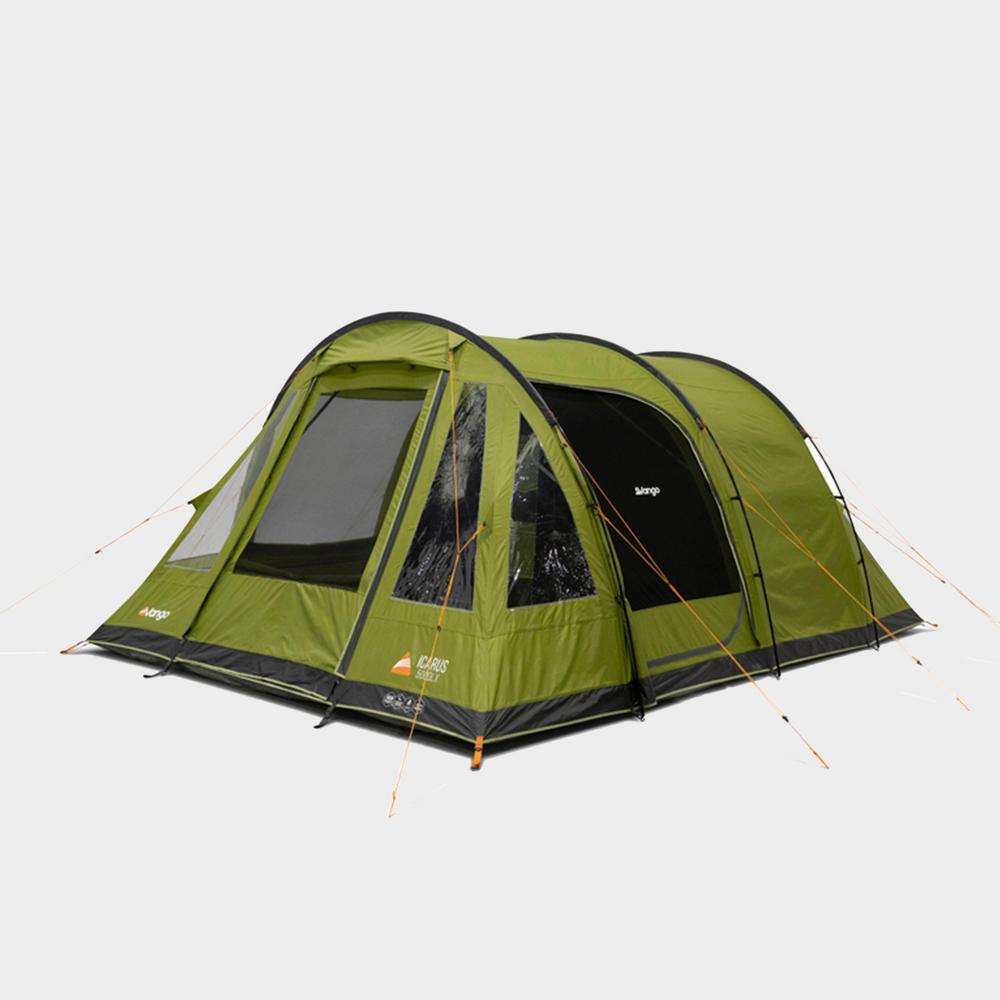
Family camping should feel like a holiday, not a wrestling match with canvas and poles. If you’re looking at 5-person tunnel tents such as the Vango Icarus 500 Deluxe, you’re already in the sweet spot for UK family adventures: big enough to be comfortable, but still manageable to pitch and pack.
Why a 5-person tunnel tent suits UK family camping
For many couples and young families, a 5-person tunnel tent is a near-ideal size. You get proper bedrooms, a usable living area and usually a porch for boots and kit, without needing a van to transport it all. The Vango Icarus 500 Deluxe Family Tent is a classic example: it sleeps up to five people, but feels particularly generous for a family of four with room for bags and a bit of furniture.
At around 470cm long and 315cm wide, with a peak height of 195cm, the Icarus 500 Deluxe gives most adults the ability to stand up comfortably in the living area. That extra headroom makes longer stays far more pleasant, especially when the weather forces you indoors. The tunnel layout naturally divides into a sleeping zone at the back and a flexible living/porch area at the front, which is a layout many families quickly come to prefer.
If you want to dive into the finer details of this particular tent, you can always read our full review of the Vango Icarus 500 Deluxe Family Tent alongside this general guide.
Understanding the Vango Icarus 500 Deluxe layout and features
The Icarus 500 Deluxe follows a tried-and-tested tunnel design: bedrooms at the rear, living area in the middle and a porch-like space at the front. Its sleeping area can be divided into two bedrooms with zipped inner doors, which is handy if you want a bit of separation between adults and children or simply like to keep kit and sleeping spaces distinct.
The tent uses Vango’s PowerFlex fibreglass poles, which are designed to be strong yet flexible. For a tent that weighs around 15.6kg and packs down to 72 x 31 x 31cm, this keeps things manageable in the car boot and when carrying from the vehicle to your pitch. It’s not a featherweight, but you’re in classic family-camping territory rather than backpacking.
Practical details that stand out include:
- 4000mm HH polyester flysheet – very respectable waterproofing for UK summer and shoulder-season use.
- 10,000mm HH sewn-in groundsheet – helps keep groundwater and draughts firmly outside.
- Two mesh doors – a full mesh door at the front and another at the side, plus half mesh inner doors for the bedrooms.
- Vango AirZone ventilation – vents and mesh panels designed to keep air flowing and reduce condensation.
- Porch/living area – space to store boots, bikes, chairs and a family coolbox without crowding the bedrooms.
These features combine to give a well-balanced family tent that can handle typical British weather, while still feeling airy on warmer days.
Weather performance: staying dry and comfortable
For UK campers, waterproofing is non-negotiable. The Icarus 500 Deluxe uses a 4000mm hydrostatic head polyester flysheet and a far tougher 10,000mm groundsheet. On paper, that’s more than enough for classic rain-swept weekends in Wales, the Lakes or the Scottish Borders, provided you pitch sensibly and keep guylines tensioned.
The sewn-in groundsheet means the entire living and sleeping area is effectively sealed against drips and surface water. That’s a huge plus with children, who tend to wander barefoot and spread mud with remarkable enthusiasm. It also helps with warmth, as there are fewer gaps for cold draughts to sneak through.
Condensation, though, is something every modern tent has to manage rather than completely eliminate. The Icarus 500 Deluxe tackles this with its Vango AirZone system and extensive mesh doors. Being able to run with front and side mesh doors zipped but the solid panels rolled back allows air to flow while keeping insects out. The half mesh inner doors give a bit of additional airflow to the bedrooms, which can help overnight when temperatures drop and humidity rises.
Pitching a family tent without the stress
One of the biggest barriers to family camping is the fear of an hour-long battle with poles and fabric while the kids ask when dinner is. The Icarus 500 Deluxe is designed to go up in around 20 minutes once you know what you’re doing, which is realistic for a tunnel tent of this size.
It pitches as one piece with a sewn-in groundsheet and pre-attached guylines. That means you don’t need to clip inner tents in separately under a flapping flysheet, and you can get the structure up reasonably quickly before fine-tuning the tension. As with any larger tent, practising at home or in a local park first can transform your first night on a new site.
Fibreglass poles demand a bit of care: don’t force them, avoid bending them sharply, and make sure they’re fully seated in their eyelets before tensioning the guy lines. Carrying a small roll of tape or a repair sleeve is wise on any trip with fibreglass, regardless of brand.
If you’re still unsure whether this pitching style will suit your family, take a look at our in-depth hands-on impressions and setup notes when you check the full Vango Icarus 500 Deluxe Family Tent review.
Living space and storage: making the most of the footprint
Comfort in a family tent goes beyond the number of berths on the box. How easily you can move around, store kit and deal with wet gear matters just as much.
The Icarus 500 Deluxe’s tunnel design creates a decent middle living area you can furnish with a small table and a couple of chairs. This becomes your rainy-day base for games, reading and tea. The front porch zone is ideal for stashing bikes, muddy boots and a kitchen setup, keeping the inner living area cleaner and more homely.
A few tips for using this kind of layout effectively:
- Use a small tarp or footprint outside the main entrance to catch mud from shoes.
- Keep a dedicated “wet kit” zone in the porch so damp coats and boots don’t migrate to the bedrooms.
- Consider low camp cupboards or storage boxes to keep the living area tidy and minimise trip hazards.
- Use soft lighting or lanterns in the living area to create a more relaxed, homely feel in the evenings.
Who the Vango Icarus 500 Deluxe suits best
Based on its size, layout and features, the Vango Icarus 500 Deluxe is well suited to:
- Families of three or four looking for a main holiday tent.
- Couples who like extra space and a separate bedroom plus storage room.
- Campers who mostly use sites with car access rather than walking in long distances.
- Those who camp several times a year in varied UK conditions.
It’s less ideal if you’re limited by weight or have a very small car, as 15.6kg plus the bulk of the pack size adds up once you factor in sleeping bags, mats and cooking kit. If you mostly head out for one-night trips or lightweight weekend breaks, you might prefer a more compact, simpler tent.
Comparing alternatives: is an air tent worth it?
When you start looking at 5-person family tents, you’ll quickly notice a split between traditional poled tents and newer air-beam models. A useful comparison to the Icarus 500 Deluxe is the Eurohike Rydal Air 500 5 Person Tent.
Both are aimed at similar users: small families or couples who want a comfortable base on UK campsites. The main difference lies in the structural system. Where the Vango relies on fibreglass poles, the Rydal Air 500 uses inflatable beams that you pump up to create the frame. This changes the pitching experience significantly.
Pitching: poles vs air beams
With the Vango Icarus 500 Deluxe, you’ll be threading and gently bending fibreglass poles into sleeves, then pegging and guying as you go. Once you’ve done it a couple of times, a 20-minute pitch is achievable.
The Eurohike Rydal Air 500, as its name suggests, is designed around quick inflation. Instead of threading poles, you attach a pump to each beam and inflate to the recommended pressure. For some families this feels easier and less fiddly, especially if one person is often setting up while another watches the children. To see how that works in practice, you can read our detailed look at the Eurohike Rydal Air 500.
Space, comfort and price
In real-world use, both tents aim to provide comparable space and comfort: sleeping up to five, with clear living areas and room for family kit. The precise internal layout and headroom will differ, but they occupy the same broad category of “do-most-things” family tunnel tents.
Air tents can be a little more expensive than their poled equivalents, though prices vary by model and retailer. In return, many campers appreciate the simplified pitching and lack of rigid poles that can snap under stress. Poled tents like the Icarus 500 Deluxe typically offer solid value for money with proven designs and easily replaceable poles if anything goes wrong.
Key things to consider before choosing your family tent
Whether you’re leaning towards the Vango Icarus 500 Deluxe or an alternative 5-person tent, it helps to work through a short checklist.
1. How many people will actually sleep in it?
Manufacturers often list maximum capacities based on everyone sleeping shoulder to shoulder. For family camping, it’s wise to treat a “5-person” label as ideal for 3–4 people plus luggage. This gives you a more realistic sense of the space you’ll enjoy on a wet afternoon when everyone’s inside.
2. Where and when do you mostly camp?
If most of your trips are on well-serviced UK campsites between late spring and early autumn, a tent like the Icarus 500 Deluxe with a 4000mm HH flysheet and strong groundsheet is more than adequate. If you plan to push into cooler shoulder seasons or more exposed locations, pay extra attention to guying options, wind stability and ventilation to balance warmth and condensation control.
3. How far will you carry the tent?
If you’re usually parked near your pitch, a 15–16kg pack weight is manageable. You’ll appreciate the bigger living area once you’re set up. If you regularly walk further from the car or rely on public transport, check the packed size and weight carefully and consider whether a slightly smaller or lighter tent might make life easier.
4. Pitching confidence and time
Think honestly about who will be pitching the tent and how much help they’ll have. A tunnel tent like the Vango Icarus 500 Deluxe is straightforward if you’re comfortable handling poles and guylines, and pre-attached features keep faff to a minimum. If you want to remove as much perceived complexity as possible, an air-beam alternative such as the Eurohike Rydal Air 500 might appeal.
Looking after your tunnel tent
Whichever 5-person tent you choose, a little care goes a long way to keeping it performing well for many seasons.
- Dry it thoroughly – never store your tent damp. If you have to pack away in the rain, pitch it at home to dry fully before long-term storage.
- Clean gently – brush off mud and leave stubborn dirt to dry before flaking it away. Avoid harsh detergents which can damage waterproof coatings.
- Protect the groundsheet – use a footprint or extra groundsheet if your pitches are often stony or muddy, to reduce wear on the sewn-in base.
- Check guylines and poles – before each trip, inspect for frays, cracks or missing pegs and replace anything suspect.
- Re-proof when needed – if water stops beading on the flysheet, consider using a suitable re-proofing product to refresh its resistance.
Conclusion: choosing the right 5-person tent for your family
The Vango Icarus 500 Deluxe Family Tent offers a well-balanced package for UK family campers: a roomy tunnel layout, solid waterproofing, a sewn-in groundsheet and features like Vango AirZone ventilation and mesh doors that make real-world use more comfortable. It slots neatly into that popular 5-person category where families of three or four get the breathing room they need without hauling an enormous canvas palace around the country.
If you’re trying to decide between a traditional poled design and an air-beam alternative like the Eurohike Rydal Air 500, think about how you camp, who’s doing the pitching and how often you’ll use the tent. Then spend a few minutes exploring the hands-on experiences in our linked reviews – starting with our full Vango Icarus 500 Deluxe Family Tent review and our look at the Eurohike Rydal Air 500 – so you can head into your next family camping trip with confidence.