
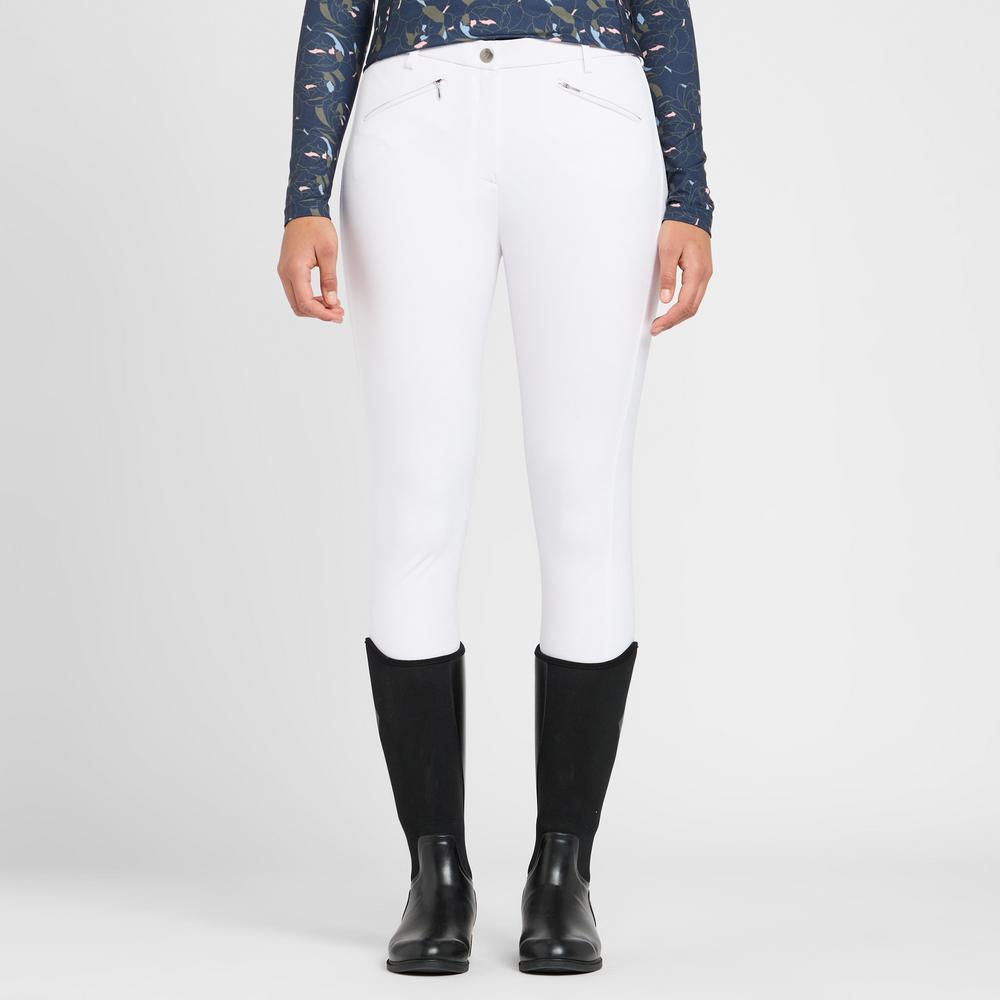
Good breeches can make the difference between feeling distracted and feeling completely in tune with your horse. The Aubrion Women’s Thompson Knee Patch Breeches are a popular option for riders who want something flattering, practical and secure enough for everyday yard life and schooling. In this guide we’ll use the Thompson breeches as a real-world example of what to look for, how to choose the right style, and which accessories pair well for comfortable hours in the saddle.
Why your choice of breeches matters
Spending long stretches in the saddle exposes every flaw in your clothing. Seams that rub, fabric that bags out or a waistband that digs in will all steal your focus from your riding. Well-designed breeches support your position, protect your skin and give you enough grip without locking you into the saddle.
The Aubrion Women’s Thompson Knee Patch Breeches are tailored into a form-fitting, flattering shape that’s meant to work both in the saddle and around the yard. With a contoured seat and matte silicone knee patches, they’re a good example of modern breeches that blend performance and everyday comfort rather than just looking the part.
Key features to look for in women’s riding breeches
Whether you’re eyeing the Thompson breeches or any similar pair, there are a few core features worth prioritising.
1. Cut and shape
A close, ergonomic cut keeps excess fabric from bunching under chaps or long boots. The Aubrion Thompson design uses a contoured seat and pleated front to create a neat silhouette that moves with you. Look for:
- A contoured seat that follows your curves without sagging.
- Pleats or darts at the front to give room to move without excess bulk.
- Leg cuffs rather than bulky Velcro closures to sit smoothly under boots.
Try adopting a riding position in the changing room (or at home if you buy online): bend your hips and knees, and check that nothing digs into your waist or pulls uncomfortably behind the knee.
2. Grip where you need it
Grip is one of the main differences between basic leggings and proper breeches. The Aubrion Thompson uses matte silicone knee patches, which give subtle stickiness on the lower leg to stabilise your position over fences or in sharper transitions.
For most all-round riders, knee patch breeches are a great balance: they help keep your leg still, yet still allow easy adjustments in your position. Full seat breeches offer more grip across the whole seat and inner leg, which some dressage riders prefer, but they can feel warmer and more restrictive for jumping or hacking.
3. Pockets and practicality
Riding is full of little things to stash – keys, a phone, a hoof pick, a few treats. Zip pockets, as found on the Thompson breeches, are invaluable. They stop valuables working loose while you’re posting or cantering and give you a secure space for a yard key or cards.
Other small details to look for include belt loops so you can fine-tune the fit with a belt, and a tidy logo print rather than bulky patches which might rub under a body protector or jacket.
4. Colour and discipline
The Aubrion Women’s Thompson Knee Patch Breeches are available in white, which instantly suggests competition days, clinics or any time you want a really smart, classic look. White is less forgiving than darker colours, so many riders reserve it for shows and keep another pair of breeches for mucking out and hacking.
If you’re buying your first pair, consider whether you’re mostly schooling, hacking or competing. Darker shades hide arena dust and stable stains better, while white or light neutrals are often preferred in the dressage and showjumping ring.
Fitting and sizing tips for women’s breeches
Even the best-designed breeches will disappoint if the size is off. Use the Thompson breeches as a template for what a good fit should feel like:
- Waistband: Should sit comfortably without gaping at the back when you lean forward. Belt loops let you tweak the fit with a slim belt.
- Seat: A contoured seat, as on the Aubrion pair, should feel supportive but not tight. You shouldn’t see horizontal drag lines across the seat when you stand naturally.
- Leg: The fabric should skim the leg, with enough stretch to bend and mount easily. The lower leg cuffs should sit flat under half chaps or boots without wrinkling.
- Length: Modern leg cuffs give some wiggle room on length, but you don’t want the fabric riding far up your calf when you bend your knee.
If you’re between sizes, consider how you like your breeches to feel. Some riders prefer a very snug, almost compression-like fit; others value a touch more ease, especially for longer hacks.
Everyday use: from schooling to stable chores
The Thompson breeches are described as suitable for everyday use, which is important if you’re someone who goes from mucking out to a schooling session without changing. A smarter, tailored cut can still be perfectly practical as long as the fabric is robust enough and the knees offer enough grip.
When you’re comparing options, ask yourself:
- Will I be happy wearing these while grooming, lunging and sweeping up?
- Is the fabric thick enough to avoid accidental see-through moments, especially in lighter colours?
- Do the leg cuffs and seams feel robust enough for frequent use with half chaps or boots?
If you want more detail on how the Aubrion Thompson breeches cope with real yard life, you can always read our full review of the Aubrion Women’s Thompson Knee Patch Breeches once you’ve finished this guide.
Pairing your breeches with the right legwear
Breeches are only one part of your lower-half riding kit. To get the most from any knee patch style, you’ll want either tall boots or half chaps to protect your lower leg and create a close contact with the horse.
Half chaps: a flexible alternative to long boots
Half chaps are a popular choice for everyday riding because they’re easy to put on, often more affordable than long boots and work well over short jodhpur boots. Synthetic options like the Moretta Adults Amara Half Chaps are designed to sit neatly over breeches without adding bulk.
If you’re considering a breeches-and-chaps setup, it’s worth reading about real-world chaps options. For example, you can explore how the Moretta Adults Amara Half Chaps in Black perform in regular use, or look at the styling differences in the Moretta Adults Amara Half Chaps in Brown if you prefer warmer tones with your breeches.
Complementary tack: keeping your leg stable from the horse’s side
While breeches do a lot to support your position from your side of the saddle, certain pieces of tack help you stay in sync with your horse as well. It’s useful to think of your kit as a system, especially if you’re starting to refine your riding or tackle more demanding work.
Running martingales
For riders doing more forward work or jumping, a running martingale can help keep the horse’s head and neck at a manageable height without restricting their natural movement. This can indirectly make it easier for you to maintain a stable, consistent contact with the reins, especially when combined with breeches that keep your leg secure.
If you’re curious about tack options, you might find it helpful to see how different martingales compare in practice. For instance, you can look at the Velociti Running Martingale in Black for a classic, discreet look, or the Velociti Running Martingale in Havana if you ride in brown leather.
Bits and contact
A stable lower leg, supported by breeches with good grip like the Aubrion Thompson, also helps you maintain quieter hands. Bit choice can influence how clearly your aids are received. For those exploring double bridles or more advanced bitting setups, options like a ported Weymouth can offer refined communication in educated hands.
As your riding evolves, it’s worth learning how this kind of equipment behaves. You can get a deeper sense of how a Weymouth might integrate into your setup by reading about products such as the Shires Port Weymouth, and considering how your seat and leg – supported by the right breeches – contribute to overall harmony.
Caring for your breeches so they last
Good breeches are an investment, especially if you choose a smarter white pair for competition. With a bit of care, styles like the Aubrion Women’s Thompson Knee Patch Breeches can stay looking sharp and performing well for a long time.
- Wash inside out: This helps protect the silicone knee patches and logo print from abrasion in the machine.
- Use gentle detergent: Avoid harsh detergents and fabric softeners which can affect stretch fibres and adhesives.
- Cool wash, line dry: Heat is the enemy of elasticity. A cool wash and air drying will help maintain the fit and grip.
- Treat stains promptly: With white breeches especially, spot-treat marks from mud or saddle soap as soon as possible before washing.
Storing your breeches folded rather than crumpled in a tack room bag, and keeping them separate from sharp buckles or studs, will also help prevent snags and pulls.
When to invest in a smarter pair
If you currently ride in basic leggings or older breeches, it can be hard to know when it’s worth stepping up to something more tailored like the Aubrion Thompson. A few signs it might be time to upgrade include:
- You’re competing more often and want a cleaner, more professional look.
- Your current breeches are sagging at the seat or sliding down at the waist.
- You feel you’re fighting for grip in the saddle, especially in transitions or over fences.
- Seams or bulky fastenings are rubbing under your chaps or boots.
If that sounds familiar, moving to a contoured, silicone knee patch design could make a noticeable difference in comfort and confidence. To see how the Aubrion pair performs across different riding situations, you can always follow up with the dedicated Aubrion Women’s Thompson Knee Patch Breeches review.
Comparing alternatives and building your kit
While breeches are the focus here, it’s helpful to think about how all your gear works together. A pair of everyday knee patch breeches like the Thompson model, a set of robust half chaps, and thoughtfully chosen tack can form a versatile base for most disciplines.
- Breeches: A tailored, everyday pair with features like zip pockets, contoured seat and silicone knee patches gives you security without sacrificing comfort.
- Lower leg protection: Half chaps such as the Moretta Adults Amara Half Chaps Black or Moretta Adults Amara Half Chaps Brown complement breeches by smoothing the leg and improving grip.
- Tack for balance: A suitable running martingale like the Velociti Running Martingale Black or Velociti Running Martingale Havana, and the right bit such as the Shires Port Weymouth, can help fine-tune communication from your leg and seat through to the horse’s mouth.
By gradually upgrading one element at a time, you can build a kit that supports your riding ambitions without replacing everything at once.
Choosing the right breeches is about more than just picking a size and colour – it’s about finding a pair that fits your body, your discipline and your daily routine around the yard. The Aubrion Women’s Thompson Knee Patch Breeches offer a useful benchmark for what modern, everyday breeches can deliver, from contoured comfort to practical zip pockets and silicone grip. If you’d like to dive deeper into how they feel and perform in real use, take a look at the dedicated Aubrion Women’s Thompson Knee Patch Breeches review, and explore the linked reviews of complementary gear to round out your riding wardrobe.