
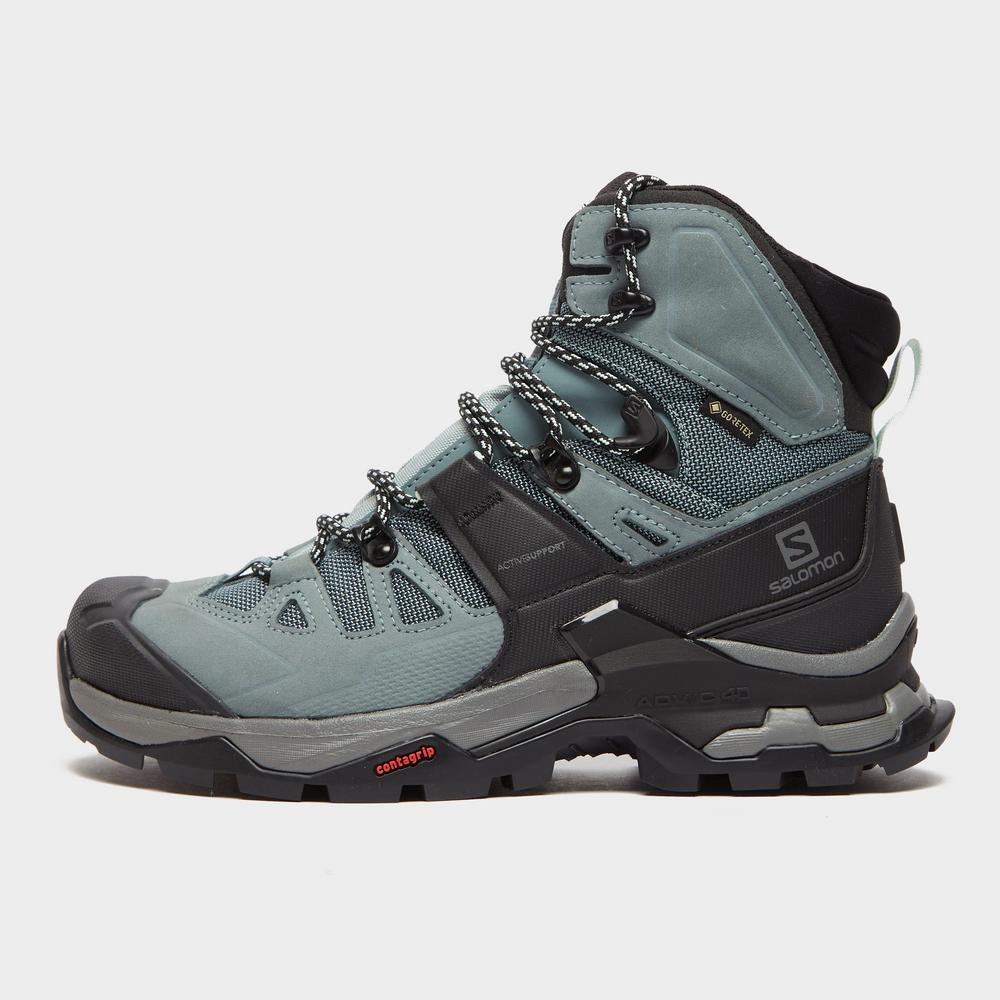
If you spend your weekends chasing ridgelines, moorland paths and long-distance trails, a trustworthy pair of women’s hiking boots quickly becomes your best outdoor investment. The Salomon Women’s Quest 4 GORE-TEX Hiking Boot is built with serious UK adventures in mind, combining durable nubuck leather with a waterproof GORE-TEX membrane and ankle-focused support to keep you moving in comfort.
Why supportive women’s hiking boots matter
Many walkers start out in trainers, but as your routes get longer, rougher and wetter, the right boot makes a huge difference. Supportive women’s boots like the Salomon Women’s Quest 4 GORE-TEX Hiking Boot are designed to cradle the foot, protect your ankles and keep the elements out, so you can focus on the views instead of your feet.
The Quest 4 uses Salomon’s SensiFit™ system, which wraps the foot from the midsole to the lacing system. Paired with a traditional lacing setup and eyelets, that lets you fine-tune the fit around your instep and ankle. The result is a boot that feels secure without needing to be over-tightened, ideal for long descents where sloppy fit can cause bruised toes and blisters.
Waterproofing, weather protection and breathability
UK weather is famously unpredictable, and boots that can shrug off mud, drizzle and surprise downpours are worth their weight in gold. The Quest 4 combines naturally water-resistant nubuck leather with a dedicated GORE-TEX membrane, designed to keep water out while still allowing sweat vapour to escape.
A few details help it cope particularly well with wet conditions:
- Nubuck leather upper – inherently tough and water-resistant, with extra treatment for water repellency.
- Water-repellent finish – a special non-absorbent treatment that helps rain bead and roll off rather than soaking in.
- Gusseted tongue – stops water, grit and debris sneaking in through the lace area.
- Protective mudguards and toecap – shield against splashes, scree and the inevitable stubbed toe on hidden rocks.
While no boot can stay perfectly dry in every situation, this combination is well suited to typical British hill days, boggy Pennine paths and slushy winter tracks when paired with good socks and sensible gaiters.
Comfort features for long days on the trail
Comfort is about more than just cushioning. The Quest 4 balances support and softness with a mesh and textile lining that feels kind to your feet over long distances. The lining is there to improve breathability and manage moisture against the skin, reducing the chance of hot spots building up.
Salomon’s Active Support design focuses on the ankle area, providing stability when you traverse cambered slopes or carry a heavier pack. This is particularly useful on multi-day treks where fatigue sets in and your footwork becomes less precise. Combined with the SensiFit™ cradle, it helps your foot feel locked in place without pinching.
The boot is also PFC free, which will appeal if you are trying to make more environmentally-conscious kit choices without sacrificing performance.
How to get the best fit from the Salomon Women’s Quest 4 GORE-TEX
Even the best boot can feel wrong if the fit is off. Women’s hiking boots are generally shaped with a slimmer heel and midfoot and often a slightly lower volume overall, and the Quest 4 follows that more anatomical approach.
1. Try with your hiking socks
Always try boots with the socks you will actually hike in. A medium-weight merino or synthetic hiking sock is a good match for a GORE-TEX leather boot like this, providing cushioning and moisture management.
2. Check toe room and heel hold
Stand up and gently kick your toes forward in the unlaced boots. You should still have a little clearance at the front to avoid bruising on descents. Then lace them up firmly but not tightly, and walk around. Your heel should stay put with only minimal lift, and you should not feel any sharp pressure points around the forefoot or ankle.
3. Fine-tune with lacing
The traditional lacing system with multiple eyelets lets you customise tension. You can keep the lower section secure for stability while easing off the upper for more ankle freedom, or cinch the top for extra support on steep ground. Experiment on shorter local walks before committing to long mountain days.
If you want more detail on how the Quest 4 feels over mixed terrain, you can read our full review of the Salomon Women’s Quest 4 GORE-TEX Hiking Boot for in-depth, hands-on impressions.
Looking after leather GORE-TEX boots
With a little care, leather hiking boots can last for many years. The nubuck leather on the Quest 4 is robust, but it will reward regular maintenance.
Clean after muddy walks
- Rinse off mud with lukewarm water and a soft brush or cloth.
- Avoid harsh detergents that can strip the leather’s natural oils or damage the membrane.
- Remove the insoles to help the boots dry more quickly and prevent odours.
Dry slowly and naturally
Never dry boots directly on radiators or in front of strong heat sources, as this can crack the leather and weaken glues. Instead, leave them in a well-ventilated spot at room temperature. Stuffing with newspaper can help draw out moisture more quickly.
Reproof regularly
Over time, the water-repellent finish on the leather will wear off. When you notice water no longer beading on the surface and the leather darkening quickly when wet, it is time to reproof. Use a nubuck-compatible spray or cream designed for waterproof footwear and follow the instructions carefully.
Is the Salomon Women’s Quest 4 GORE-TEX right for you?
The Quest 4 GORE-TEX Hiking Boot is aimed at walkers who want stability, protection and durability for demanding terrain. If your walking involves hillier routes, multi-day treks or year-round use in the UK, it is the sort of boot that makes sense as a primary option.
Its key strengths include:
- Supportive fit thanks to SensiFit™ and Active Support.
- All-weather protection from nubuck leather, a GORE-TEX membrane and thoughtful mudguards.
- Comfortable lining using mesh and textile for breathability.
- Eco consideration with a PFC-free design.
If you mostly do short, low-level walks in warm, dry conditions, a lighter and more breathable shoe might feel more agile. But for classic UK hillwalking, coastal paths in mixed weather and backpacking trips, the Quest 4 sits squarely in its element. For an in-depth look at how it performs over time, you can dive into our detailed Salomon Women’s Quest 4 GORE-TEX Hiking Boot review.
Comparing alternatives and finding your ideal boot
Boot choice is personal, and even within similar categories there are meaningful differences in feel and fit. The alternatives to the Quest 4 will usually vary in weight, ankle height, stiffness and how much leather versus textile they use.
When weighing up alternatives, think about:
- How often you hike – frequent walkers can justify a slightly more robust boot that may start out stiffer.
- Typical terrain – rocky, uneven paths benefit from structured boots; smoother trails may suit lighter models.
- Pack weight – high-ankle, supportive boots come into their own when you add a heavy rucksack.
- Climate and season – waterproof leather boots for year-round use, or lighter, more breathable options for hot-weather hiking.
Some alternative boots in the same general space as the Salomon Quest 4 lean more towards lightweight agility, swapping leather for fabric uppers and reducing ankle height. Others push further into backpacking territory, with very stiff soles and higher collars. It is worth trying several styles to see which feels most natural underfoot.
Tips for choosing women’s hiking boots for UK adventures
Think in terms of your longest, hardest day
Pick boots for the most demanding days you reasonably expect to tackle, not just the easiest strolls. If your goal is multi-day national trails or big mountain days, supportive leather boots like the Quest 4 will pay off when you are tired and the weather turns.
Balance weight and protection
Heavier boots usually offer more protection and longevity, but they require more effort with every step. Lighter boots feel more nimble and less tiring on gentle paths, but can be less reassuring on loose rock or when side-hilling. Decide where you want to sit on that spectrum and choose accordingly.
Consider sustainability and materials
Features such as PFC-free treatments and responsibly sourced leather are increasingly common, and it is good to factor them into your decision. While performance remains crucial, choosing durable boots that last longer is one of the simplest ways to reduce your kit’s environmental impact.
Making the most of your new boots
Once you have settled on a boot like the Salomon Women’s Quest 4 GORE-TEX, give yourself time to get used to them. Break them in on local loops and short hill days before committing to a big trip. Use those early walks to experiment with lacing patterns, sock weights and insoles if needed.
Over time, your boots will mould slightly to your feet and become more comfortable. Regular cleaning and reproofing will keep them performing at their best, so that the leather stays supple and the waterproofing keeps working, season after season.
If you are on the fence, want more detail about how the Quest 4 copes with real UK conditions, or simply enjoy gear deep-dives, have a look at our hands-on impressions and trail testing in the dedicated article: full review of the Salomon Women’s Quest 4 GORE-TEX Hiking Boot. It is a useful next step towards choosing the right women’s hiking boots for your adventures.