
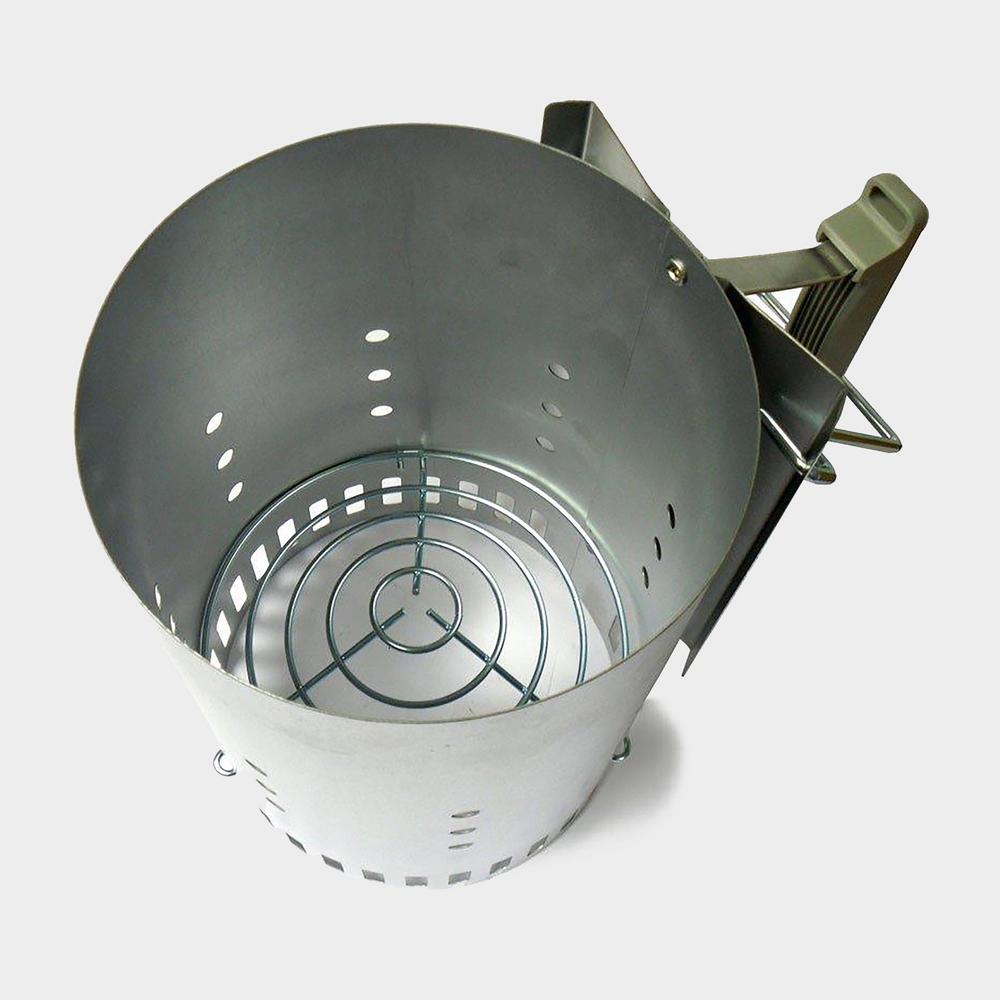
If you love the flavour of charcoal but hate the faff of getting it lit, a chimney starter can completely change how you barbecue at home and on the campsite. The Weber Chimney Starter is one of the most popular options, and in this guide we’ll look at why it’s such a useful camping companion, how to get the best from it, and how to choose the right fuel and accessories to go with it.
What is the Weber Chimney Starter and why use one?
The Weber Chimney Starter is a simple metal cylinder designed to light charcoal quickly, evenly and without lighter fluid. Instead of battling with matches and scattered briquettes, you load your charcoal into the chimney, light kindling underneath, and let the chimney stack effect do the hard work. Within 15–25 minutes, you’ve usually got a full load of glowing coals ready to pour into your barbecue or firepit.
For campers, that reliability makes a big difference. When you’re cooking for hungry people after a long day outdoors, you don’t want to be starting from scratch every time the wind gusts. A good chimney starter gives you a repeatable, almost foolproof way to get your charcoal going, whether you’re in the garden or on a weekend away.
If you want a deeper dive into how it performs in real-world use, you can read our full review of the Weber Chimney Starter, but here we’ll focus on practical tips and buying advice.
How a chimney starter makes charcoal cooking easier
Charcoal gets a bad reputation for being slow and unpredictable, especially compared to gas. A chimney starter takes away most of that frustration by tackling the three main pain points: ignition, timing and heat distribution.
- Faster ignition: The chimney design funnels hot air upwards, so the coals catch from the bottom and spread upwards without needing accelerants.
- Controlled timing: You know roughly how long a full load takes to light, so you can plan your cooking rather than guessing when the barbecue will be ready.
- Even bed of coals: Because everything lights together, you get a more level cooking temperature across the grill.
The Weber Chimney Starter is built around that simple concept, with a sturdy body, ventilation holes and a handle system that lets you pour hot coals with more control. It’s particularly good for people who regularly grill on charcoal at home and want the same convenience on car camping trips.
Step-by-step: Using a chimney starter on a campsite
Getting the best out of a chimney starter is all about good preparation and safe handling. Here’s a straightforward method that works well with the Weber Chimney Starter on campsites and in gardens alike.
1. Choose a safe setup spot
Place your chimney starter on a non-flammable, stable surface. The safest options are usually:
- On the charcoal grate inside your barbecue
- On a metal firepit grate
- On a paving slab or stone, well away from tents and dry grass
Avoid directly on grass, plastic or wooden tables – the bottom gets extremely hot.
2. Load the charcoal
Fill the chimney with your chosen charcoal. Briquettes stack neatly and give a steady, long burn, which is excellent for general grilling. Weber’s own fuel is designed with this in mind – if you’re curious about how their briquettes perform, you can read our full Weber Briquettes 8kg review for more detail.
Lumpwood charcoal is a good alternative when you want a faster light and hotter burn, for things like searing steaks, but it can burn through more quickly.
3. Add your firelighters underneath
Under the chimney, place your firelighters or kindling. Natural firelighters are a popular choice because they don’t leave a chemical smell. You can also use scrunched-up newspaper or bits of cardboard, but they tend to burn out faster, so use plenty and make sure there’s good airflow.
4. Light and wait
Light the firelighters through the holes at the bottom of the chimney. You should see smoke start to drift up the sides, then small flames licking through the charcoal as it catches. Leave it well alone while it does its thing – no poking or shaking required.
After 10–15 minutes you’ll see the top layer beginning to ash over. When most of the coals on top are grey with a red glow inside the chimney, they’re ready to use.
5. Pour safely
Put on proper heatproof gloves before handling the Weber Chimney Starter – the metal will be very hot. Grip the main handle firmly and, if the model has one, use the secondary handle or shielded section to help you tip. Pour the coals slowly into your barbecue or firepit, spreading them out with a metal tool if needed.
Once the coals are in place, you can set up your cooking zones: a hotter side for searing, and a cooler side for gentler cooking or resting food.
Choosing the right charcoal: briquettes vs lumpwood
A chimney starter will work with most solid charcoal fuels, but matching your charcoal to your cooking style makes a noticeable difference.
Briquettes for steady, predictable heat
Briquettes are compressed pieces of charcoal, often made from hardwood offcuts and other organic material. They’re very consistent in size and density, which means they behave predictably in a chimney starter and on the grill.
Weber’s own briquettes are a good example. They’re designed to light reliably and burn for a generous length of time, ideal for longer cooks, indirect grilling and family barbecues. If you want to know how they actually perform with real-world use, our in-depth look at the fuel in the Weber Briquettes 8kg review is worth a read.
Lumpwood for quick, high heat
Lumpwood is simply chunks of carbonised wood. It tends to light faster and burn hotter, which is brilliant for quick weeknight grills and searing. However, it doesn’t always last as long as briquettes, and the irregular shapes can mean slightly less consistency.
For camping, some people use briquettes for main meals and lumpwood for quick breakfasts or fast grills, all started neatly using the same chimney starter.
Packing a chimney starter for camping
The main drawback of a chimney starter for camping is its size. You’re committing boot space to a metal cylinder. But with a bit of planning, you can make it work very efficiently for car camping and festival trips.
- Use it as storage: Pack firelighters, gloves or tongs inside the chimney to save space.
- Protect other kit: If your chimney starter has any rough or sooty edges, slip it into an old tote bag or bin liner before packing.
- Think about fuel: Bagged briquettes travel well and store neatly; just remember they’re heavy, so don’t overload roof boxes.
Because of its bulk, a Weber Chimney Starter is more suited to car-based camping than hiking or bikepacking. For those trips, you’re usually better off with lightweight stoves and smaller fire solutions.
Safety tips for using the Weber Chimney Starter
Any piece of kit that gets glowing hot deserves respect. A few habits will keep you and your gear safe.
- Wear gloves: Heatproof gloves make a huge difference to comfort and safety when pouring coals.
- Keep kids and pets back: Treat a loaded chimney starter like an open fire – it’s not something to step over or sit next to.
- Check campsite rules: Some sites restrict open fires or charcoal use, especially in dry conditions.
- Dispose of ash properly: Let coals go completely cold before binning them, and use metal containers if you need to move them while warm.
The Weber chimney design helps keep flames contained, but the radiant heat is still intense. Most accidents happen when people underestimate how hot the metal gets or where sparks can land.
Looking after your chimney starter
One of the advantages of the Weber Chimney Starter is how little maintenance it really needs. With basic care, it should last for years of regular barbecues and camping trips.
- Cool completely before handling: Wait until the metal is cold to the touch before emptying ash or packing it away.
- Shake out loose ash: Turn it upside down and tap gently to remove ash and debris.
- Brush, don’t scrub: A stiff brush removes surface soot; you don’t need it shiny.
- Store it dry: Keeping it under cover or in a shed or garage helps prevent rust.
Periodically check that the handle and any heat shield are secure. If you notice any loose fixings, tighten them before your next trip so you’re not dealing with wobbly hardware around hot coals.
Lighting the campsite: a quick word on head torches
Charcoal cooking often happens in the evening, and plenty of people end up using their phone torches to see what’s going on at the grill. A simple rechargeable head torch is a much better option, leaving your hands free for tending coals and flipping food.
Compact lights such as the VANGO Lightbeam 200 Recharge aim to hit that sweet spot between price, brightness and portability. It’s designed as a rechargeable headlamp for general camping duties, from finding your way to the loo block to checking on your barbecue. If you’re weighing up whether a budget-friendly head torch will cover your needs, you can take a look at our impressions in the VANGO Lightbeam 200 Recharge review.
Weber Chimney Starter vs alternatives and accessories
There are plenty of chimney starters and charcoal accessories on the market, so where does the Weber option fit in? In broad terms, it’s a solid, user-friendly choice if you already cook on charcoal and want something that will see regular use.
Paired with a good fuel such as Weber Briquettes, it becomes part of a simple but effective system: reliable ignition, predictable heat and fewer flare-ups. That combination is especially appealing for family camping and for people who host regular garden barbecues, where you want to minimise surprises.
If you don’t cook over charcoal very often, or you’re tight on boot space, you might decide a chimney starter is lower priority than a good torch, extra seating or a larger cool box. On the other hand, if charcoal is your main cooking method outdoors, the convenience payoff is considerable.
To see how the Weber Chimney Starter behaves in detail – including handling, build and long-term impressions – you can read our full Weber Chimney Starter review and decide whether it meshes with your own camping style.
Final thoughts: building a stress-free charcoal setup
A dependable chimney starter like the Weber Chimney Starter turns charcoal from a chore into something you barely have to think about. Combine it with a fuel that suits your cooking style, a safe setup on site and a decent head torch for those late-evening grills, and your outdoor cooking routine becomes far more relaxed.
If you’re looking to refine your setup, it’s worth digging into real-world experiences. Explore our linked reviews of the Weber Chimney Starter, Weber Briquettes 8kg and the VANGO Lightbeam 200 Recharge to see how each piece of kit performs and decide which ones deserve a spot in your camping box.