
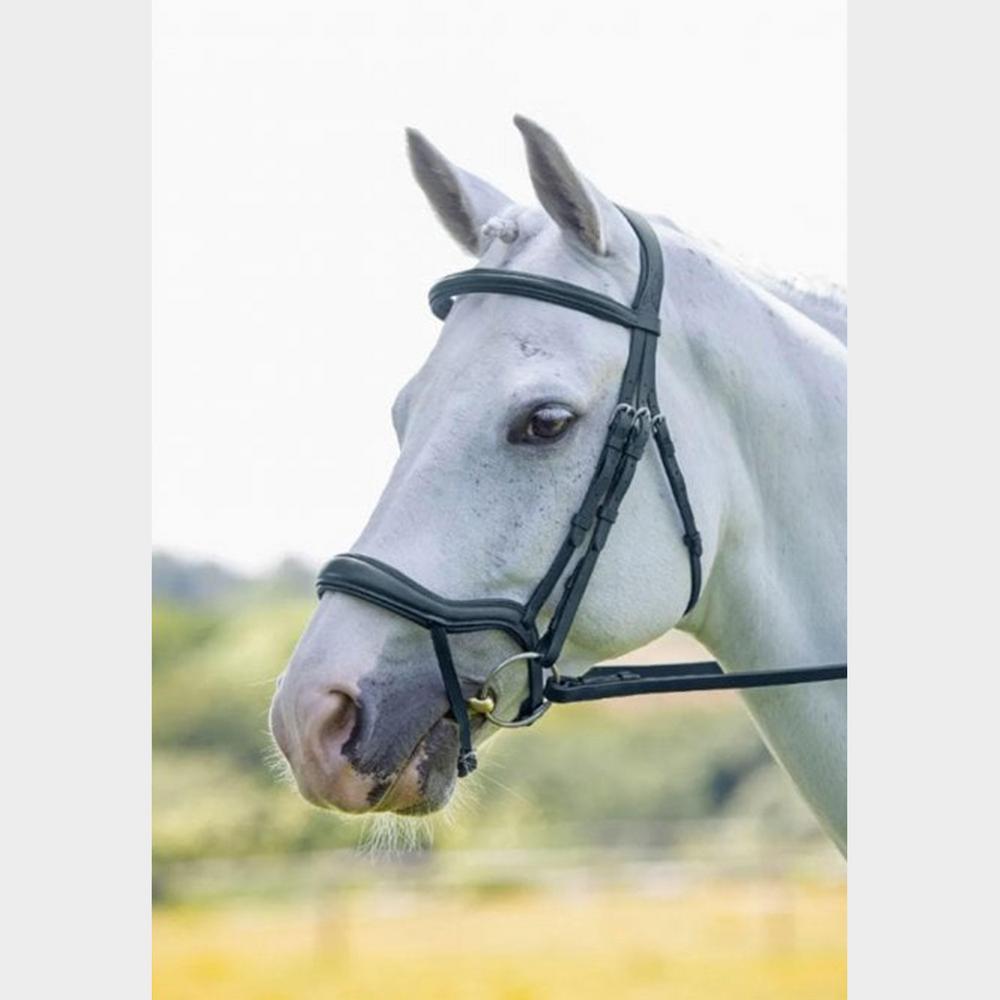
If you spend hours in the saddle, your horse’s bridle is every bit as important as your own riding hat or boots. Comfort, fit and subtle communication all start at the head, and that’s where modern anatomical designs like the Velociti Ergonomic Flash Bridle come into their own.
Why ergonomic bridles are worth considering
Traditional bridles haven’t changed much in decades, but our understanding of equine anatomy has. Nerves, blood vessels and sensitive bony areas run just under the skin on the horse’s face. Poorly fitted tack can easily cause pinching, numbness or low-grade discomfort that shows up as tension, resistance or uneven contact.
An ergonomic or anatomical bridle aims to avoid those hotspots. The Velociti Ergonomic Flash Bridle Black is a good example of how thoughtful shaping can make a practical difference:
- A shaped headpiece designed to spread pressure over a wider area.
- A poll gap and cut-out around the ears to reduce rubbing and pinching.
- A wide, raised noseband to soften pressure over the nose and jaw.
- Soft, supple leather that’s more forgiving against the skin.
None of this replaces good riding or correct fit, but it does give your horse an easier starting point. For many, that means fewer evasions, more consistent contact and a generally happier way of going.
Understanding the Velociti Ergonomic Flash Bridle
The Velociti Ergonomic Flash Bridle Black is designed to balance control, comfort and practicality for everyday flatwork and schooling. While the full tech spec is straightforward, there are a few design touches worth highlighting when you’re comparing it with more traditional tack.
FreedomFit headpiece and poll gap
The FreedomFit headpiece is built to sit more comfortably over the poll by spreading pressure across a larger padded area instead of a narrow strap. The poll gap and ear cut-outs are there to relieve pressure where the skull, neck and ears meet – an area many horses are defensive about.
If your horse is prone to head-shaking when you do up the bridle, or resents pressure behind the ears, a shaped headpiece like this can be a subtle but important upgrade.
Wide, raised noseband and flash
The wide, raised noseband is designed to cushion the face and jaw rather than creating a sharp line of pressure. Combined with the flash strap, it helps stabilise the bit and discourage excessive mouth opening without cranking the noseband tight.
For horses that like to play with the bit or cross the jaw, this style can offer quiet support, provided it’s adjusted correctly and you’re not using it to cover up pain or schooling issues.
Soft leather and included reins
Made from soft leather, the bridle should be easier to break in than stiffer, cheaper alternatives. Softer leather sits more comfortably behind the ears and under the jaw, especially on clipped horses or those with sensitive skin.
The bridle is supplied with Velociti reins, designed to give a secure, flexible attachment. For many riders that removes one buying decision, and keeps the look and feel of the set consistent. If you want more detail on how they feel in the hand, you can read our full review of the Velociti Ergonomic Flash Bridle Black.
Choosing the right noseband style: flash vs grackle vs dressage
The noseband is one of the most influential parts of the bridle, and modern ranges like Velociti’s make it easy to pick a style that suits your horse and discipline.
When a flash bridle makes sense
A flash bridle, like the Velociti Ergonomic Flash Bridle, uses a standard cavesson noseband with an additional, thinner strap that sits in front of the bit. This helps keep the bit steady and discourages excessive mouth opening.
It’s often a good match for:
- Young horses who are still learning to accept the contact.
- Horses that cross the jaw occasionally rather than habitually.
- General flatwork, hacking and low-level competition.
Grackle bridles for stronger or more forward horses
If your horse can be strong, especially for jumping or fast work, a grackle noseband can sometimes give a more stable, evenly distributed feel. It crosses diagonally over the nose, typically higher than a flash, and is designed to avoid certain facial nerves while still limiting sideways jaw crossing.
Within the same family of tack, the Velociti Velociti Grackle Bridle Black and the Velociti Velociti Grackle Bridle Havana are worth a look if you’re doing more jumping or cross-country and want a noseband that stays secure when things get lively.
Dressage-style cavesson with flash
For more formal flatwork, a neater, possibly wider cavesson can offer a clean, smart look without unnecessary bulk. The Velociti Dressage Flash Bridle Black leans in this direction, giving you the benefits of a flash attachment while maintaining a dressage-friendly silhouette.
If you focus on schooling and dressage tests and want an elegant, close-contact feel, a dressage bridle might be a better fit than a more general-purpose ergonomic model.
Black vs havana: choosing the right colour
Colour may seem purely cosmetic, but matching leather can help create a more balanced, professional look, especially in the show ring. The Velociti Ergonomic Flash Bridle is available in classic black, which pairs well with modern saddles, especially dressage and general-purpose models in black leather.
If your saddle is brown or you ride in more traditional tack, you might prefer Havana alternatives. The Velociti Velociti Ergonomic Flash Bridle Havana offers the same ergonomic concept in a rich brown tone, while the Velociti Velociti Breastplate Havana lets you carry that look through your breastplate for jumping or fast work.
Matching your bridle, saddle and breastplate helps distribute pressure more evenly too: if you use a breastplate, ensure it doesn’t pull the bridle or saddle out of position when the horse lifts its neck and jumps.
How to fit an ergonomic flash bridle correctly
Even the most thoughtfully designed bridle will cause problems if it doesn’t fit. Here’s a step-by-step guide to fitting an ergonomic flash bridle like the Velociti model.
1. Start with the headpiece and browband
- Place the headpiece behind the ears and check that the poll gap and ear cut-outs lie smoothly without trapping skin or hair.
- The browband should sit just below the base of the ears, without pulling the headpiece forwards and into them.
- If the browband bows or presses tightly against the forehead, consider going up a size.
2. Adjust cheekpieces and bit height
- Attach the bit so that it creates one or two soft wrinkles at the corners of the mouth, depending on your horse’s preference and the type of bit.
- Cheekpieces should be even on both sides and lie flat against the face.
- Check that the bit rests comfortably in the mouth; any clanging, gaping or lip pinching suggests you need to revisit the height or bit size.
3. Fit the noseband and flash
- The main noseband should sit about two fingers’ width below the projecting cheekbone.
- You should still be able to fit one to two fingers between the noseband and the front of the nose.
- The flash strap should run in front of the bit rings, gently encouraging the mouth to stay closed without clamping the jaws.
Walk your horse in-hand and watch for any signs of discomfort – excessive blinking, head tossing or resistance when you take up a light contact are all clues that something may be too tight or in the wrong place.
Everyday care for soft leather bridles
Soft leather is comfortable straight away, but it does need consistent care if you want it to last. The Velociti Ergonomic Flash Bridle’s supple leather is designed to feel broken-in quickly, but it will only stay that way with regular cleaning.
- After each ride: Wipe sweat and surface dirt with a damp, clean sponge or cloth.
- Weekly or bi-weekly: Use a leather cleaner to remove built-up grime, then apply a light conditioner to keep the leather supple.
- Avoid over-oiling: Saturated leather can stretch, weaken stitching and lose its shape. Go lightly and often, rather than drenching it.
- Store correctly: Hang the bridle on a proper bridle hook, out of direct sunlight and away from damp or extreme heat.
Regularly inspect the stitching around stress points – especially the reins, cheekpieces and noseband – so you can repair wear before it becomes a safety issue.
Comparing Velociti options: which bridle suits you best?
Within the Velociti range, you can mix and match noseband styles, colours and accessories to suit what you and your horse actually do day to day.
- Velociti Ergonomic Flash Bridle Black – a versatile, anatomical flash bridle for riders who want improved comfort around the poll and a secure, everyday schooling setup in black leather.
- Velociti Ergonomic Flash Bridle Havana – the same ergonomic concept in Havana, ideal for pairing with brown saddles and traditional tack.
- Velociti Dressage Flash Bridle Black – a smart, dressage-oriented option if you spend most of your time in the arena and prefer a sleek, formal look.
- Velociti Velociti Grackle Bridle Black – a grackle noseband in black for horses that need steadier control over fences or in faster work.
- Velociti Velociti Grackle Bridle Havana – the same grackle principle in Havana, for jumpers and eventers who ride in brown tack.
- Velociti Velociti Breastplate Havana – a matching breastplate to stabilise your saddle and complete a Havana set for jumping, hunting or cross-country.
If you’re torn between a couple of options, think about your horse’s mouth and temperament, your main discipline, and how important competition turnout is to you. Then weigh up whether an ergonomic headpiece, a different noseband style or a colour change will make the most difference.
Final thoughts
Anatomical bridles aren’t a magic fix, but they can make an appreciable difference to your horse’s comfort when combined with good training, routine checks and thoughtful bit choice. The Velociti Ergonomic Flash Bridle Black brings many of those comfort-focused ideas into an accessible, everyday design that suits a wide range of disciplines.
If you’re considering upgrading your tack, take the time to compare noseband styles, colours and matching accessories across the Velociti range, and don’t forget to read the full hands-on review of the Velociti Ergonomic Flash Bridle Black to see how it performs in real-world use before you decide.