
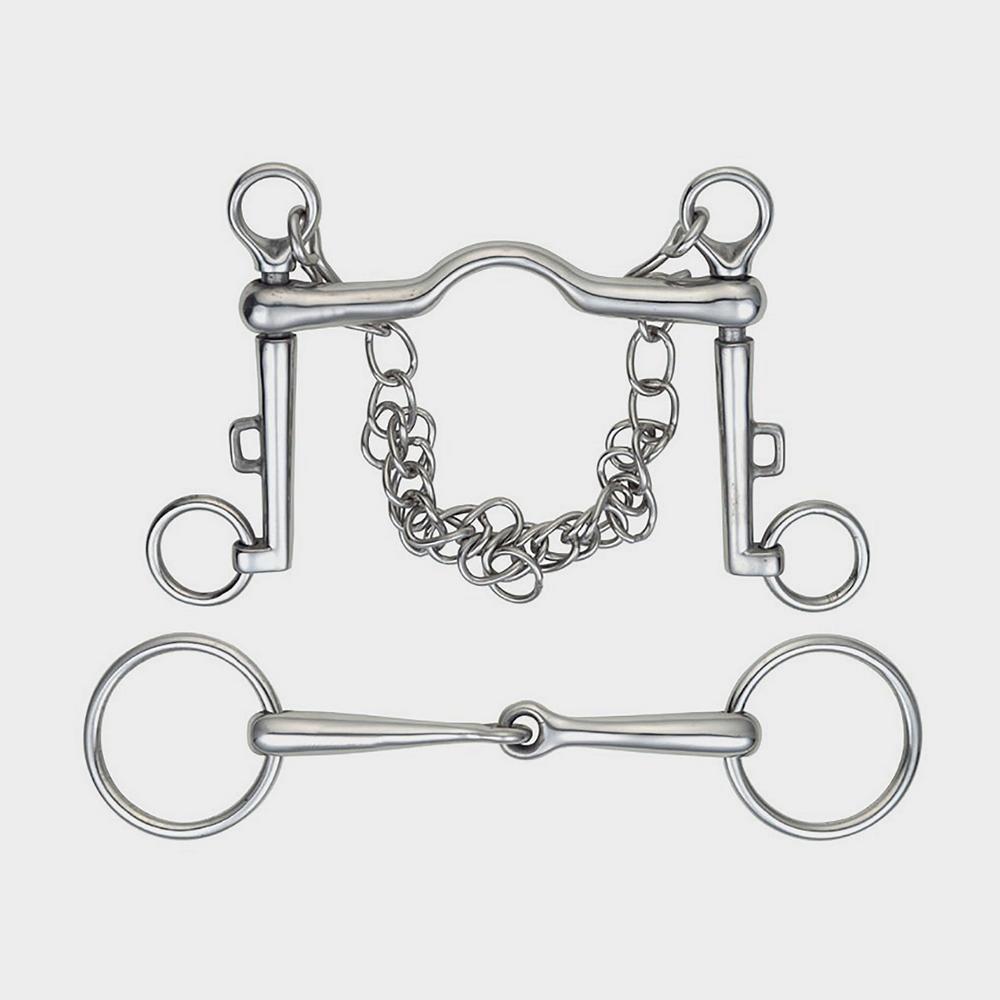
If you are stepping up your schooling, dabbling in dressage or simply looking for finer communication on a well-schooled horse, moving into a double bridle is a big milestone. The Shires Port Weymouth offers an accessible way to explore this, combining a Pelham-style ported Weymouth with a loose ring bradoon so you can refine your aids without overcomplicating your tack choice.
What is a Weymouth set and how does the Shires Port Weymouth work?
A Weymouth set is the paired combination of a curb bit (the Weymouth) and a smaller snaffle (the bradoon) used together in a double bridle. In the Shires Port Weymouth set, you get a Pelham with port and a loose ring bradoon designed to sit correctly together in the horse’s mouth.
The idea is simple:
- The loose ring bradoon provides familiar snaffle-like contact for basic steering and rhythm.
- The ported Pelham offers curb action, leverage and subtle refinement for collection, engagement and self-carriage.
- The two bits work together so you can ride mainly from the bradoon rein, adding tiny curb rein adjustments only when needed.
If you want to look at how this feels in practice with different horses, you can read our full review of the Shires Port Weymouth for an in-depth, rider-tested perspective.
Key features of the Shires Port Weymouth
The Shires Port Weymouth is built as a complete, ready-to-go set for a double bridle. Instead of piecing together a separate curb and bradoon, you get a combination designed to complement each other.
Weymouth set with Pelham and loose ring bradoon
The set includes:
- Pelham with port – offering tongue room and a curb action that engages when the curb rein is taken up.
- Loose ring bradoon – for a softer, more mobile contact, encouraging your horse to take the bit forward and seek the hand.
This pairing is ideal if you are aiming for traditional double bridle work or working towards disciplines that expect double bridle proficiency at higher levels.
Nutcracker action and how it feels
The bradoon element brings a familiar nutcracker action, similar to a standard single-jointed snaffle. Many horses going happily in a snaffle adjust more easily when the bradoon retains that feel, while the curb offers additional refinement instead of an entirely different sensation. As always, the effect of the nutcracker action depends heavily on your hands: a quiet, elastic contact makes this setup feel supportive rather than sharp.
Designed for use with a double bridle
This Weymouth set is intended to be used with a double bridle, meaning two sets of reins and appropriate cheek pieces. Because the components have been chosen to work together, it can be a helpful option for riders converting from a single bridle for the first time. If you want more detail on day-to-day handling, fit tweaks and rider impressions, have a look at our dedicated write-up and in-depth review of the Shires Port Weymouth.
When and why to consider a Weymouth bit
Not every horse or rider needs a double bridle, and moving into one before you are both ready can create more tension than harmony. However, there are clear scenarios where the Shires Port Weymouth or a similar setup makes sense.
Developing advanced flatwork and dressage
As you move into lateral work, collected paces and more advanced transitions, you may want access to subtler half-halts and clearer separation of rein aids. A double bridle lets you influence the poll, jaw and frame with fine adjustments on each rein, rather than relying solely on one mouthpiece. The ported curb in the Shires set helps create room for the tongue while still allowing you to ask for more elevation or shortening of the frame when your horse is ready.
Fine-tuning an established mouth
If your horse is already relaxed, consistent and elastic in a snaffle, introducing a Weymouth can help refine balance and lightness. You can ride predominately from the bradoon and touch the curb rein only when you need a sharper half-halt, a bit more lift in the forehand, or a clearer response before a transition. This is often where a well-designed set like the Shires Port Weymouth really comes into its own, because you have predictable, compatible components working in tandem.
Not a shortcut for schooling problems
It is tempting to see a double bridle as a solution to leaning, heaviness or resistance, but increased leverage can just magnify existing issues. If your horse is inconsistent, hollow, or frequently opens its mouth in a snaffle, those problems should be addressed before introducing a Weymouth. Think of the Shires Port Weymouth as a tool for refinement, not a quick fix for foundational training gaps.
Fitting and adjusting the Shires Port Weymouth
Correct fit is crucial to comfort and effectiveness. Even a well-designed bit can feel uncomfortable if the dimensions or adjustment are off.
Height and width in the mouth
- Bradoon height: Fit it like a standard snaffle with one or two soft wrinkles at the corners of the mouth, avoiding tightness that bunches the lips.
- Weymouth height: It should sit just below the bradoon, leaving visible space between the two mouthpieces so they do not press on each other.
- Width: Many riders use a slightly wider Weymouth than bradoon to prevent pinching, but exact sizing depends on your horse’s mouth conformation.
Watch your horse chew and settle once the bridle is on. A relaxed jaw, quiet mouth and willingness to take up contact are good signs that the fit is appropriate.
Curb chain adjustment
The curb chain should lie flat and untwisted, adjusted so the Weymouth rotates to about 45 degrees before the chain fully engages. Too tight can make the curb feel harsh and restrictive; too loose can make the bit unstable and confusing. Always check the chain on both sides and from underneath so it is even and not snagging any skin or whiskers.
Rein management and rider hands
With two sets of reins, clear organisation is essential. Many riders prefer slightly different textures or widths for the curb and bradoon reins so they can identify them by feel. Practice picking up, shortening and releasing one rein at a time at a standstill and in walk before expecting your horse to understand complex aids in canter or lateral work.
Caring for your Weymouth and bradoon
Good care keeps your bits comfortable for your horse and helps them last longer.
- Rinse after every ride: Swill the mouthpieces in warm water to remove saliva, feed and arena dust.
- Deep clean regularly: Use a mild, horse-safe soap and a small brush to clean joints, ports and around the loose rings where grime can build up.
- Inspect for wear: Check for rough spots, sharp edges or stiff joints that could rub or pinch the tongue and bars.
- Store correctly: Dry thoroughly before putting away and avoid resting wet bits directly on leather to prevent staining.
Complementary horse riding tack to consider
Once you are refining your flatwork with a Weymouth set, it is worth thinking about the rest of your tack to support a secure, comfortable ride both in the school and out hacking.
Breastplates and martingales
A secure saddle and stable rein position become even more important when you are working with more advanced contact. The Velociti Breastplate Havana is an example of traditional leatherwork aimed at keeping your saddle in place, particularly useful if you have a forward-cut saddle or ride on varied terrain.
If your horse likes to lift its head or you ride more forward disciplines, a running martingale can help maintain a more consistent contact without fixing the head. You can explore options like the Velociti Running Martingale Black or the Velociti Running Martingale Havana, choosing the colour that best matches your existing bridlework.
Footwear for riding and yard work
Fine rein aids and stable lower leg position go hand in hand. A supportive, grippy boot can make long schooling sessions more comfortable and help you maintain a consistent leg. Country boots such as the Brogini Women's Warwick Pull On Wide Country Boot offer yard-friendly practicality, warmth and coverage, and many riders use this style for hacking, general riding and yard chores.
Comparing the Shires Port Weymouth with other tack options
The Shires Port Weymouth itself is a bit, but it sits within a wider tack setup that can either support or undermine what you are trying to achieve. Choosing complementary equipment is about matching your horse’s build, workload and your riding goals.
Shires Port Weymouth vs. martingale-based solutions
If your main issue is a horse that occasionally throws its head up or becomes strong in open spaces, a running martingale might be more appropriate than moving straight into a double bridle. Tack such as the Velociti running martingales (available in both black and Havana) works by subtly influencing the rein angle when the horse lifts its head beyond a certain point, without changing the basic action of your snaffle.
In contrast, the Shires Port Weymouth changes the way pressure is applied in the mouth and poll through curb action and leverage. It is better suited to horses who are already well-balanced and need more nuanced, not stronger, communication. For some horses, a correctly fitted snaffle plus martingale and carefully developed schooling will always be a better option than a double bridle.
Shires Port Weymouth and breastplate support
When you are asking for more collected work, the last thing you want is a saddle shifting backwards or sideways, throwing you off balance and muddying your aids. Pairing a refined bit like the Shires Port Weymouth with a secure breastplate, such as the Velociti Havana model, can help keep the saddle where it should be, especially on rounder horses or in more dynamic work. This is less about changing the contact and more about ensuring that you and your tack stay stable so your rein aids remain clear.
Matching your riding boots to your tack choices
Although boots like the Brogini Warwick are not directly related to your bit choice, they have a surprisingly big impact on the quality of your aids. A supportive ankle and good grip on the stirrup help you maintain a quiet leg, which in turn lets your hand stay still and sympathetic. For riders who spend all day at the yard, a comfortable country boot that bridges the gap between stable chores and hacking is often a more practical investment than a second pair of competition-only boots.
Practical tips for riding with the Shires Port Weymouth
Once you have chosen and correctly fitted your Weymouth set, take a step-by-step approach to using it in your everyday schooling.
- Start in walk: Introduce the double bridle in a quiet environment and spend the first few sessions mostly in walk and trot, allowing your horse to explore the feel of the two mouthpieces.
- Ride from the bradoon: Hold the curb rein slightly looser at first, using it sparingly. Your main connection should still be through the bradoon, as with a snaffle.
- Short sessions: Keep early rides short and positive, finishing on a calm, successful note rather than drilling complex movements.
- Monitor your horse: Watch for signs of relaxation such as chewing, stretching into the contact and steady breathing. If your horse becomes tense, resistant or behind the contact, reassess your fit and usage.
Is the Shires Port Weymouth right for you and your horse?
If your horse is going confidently in a snaffle, you are working towards more advanced flatwork, and you want a ready-matched double bridle setup, the Shires Port Weymouth is a sensible option to explore. The combination of ported Pelham and loose ring bradoon gives you familiar snaffle contact with added refinement when you need it, without having to piece together separate bits yourself.
Before committing, it is wise to discuss the change with your instructor or a knowledgeable bit fitter and to consider how the rest of your tack, from breastplate to martingale to riding boots, supports your goals. You can dive deeper into real-world impressions, fit notes and schooling experiences in our dedicated article – simply read the full Shires Port Weymouth review for rider-tested insight. Then explore the linked reviews of complementary tack to build a comfortable, effective setup for you and your horse.