
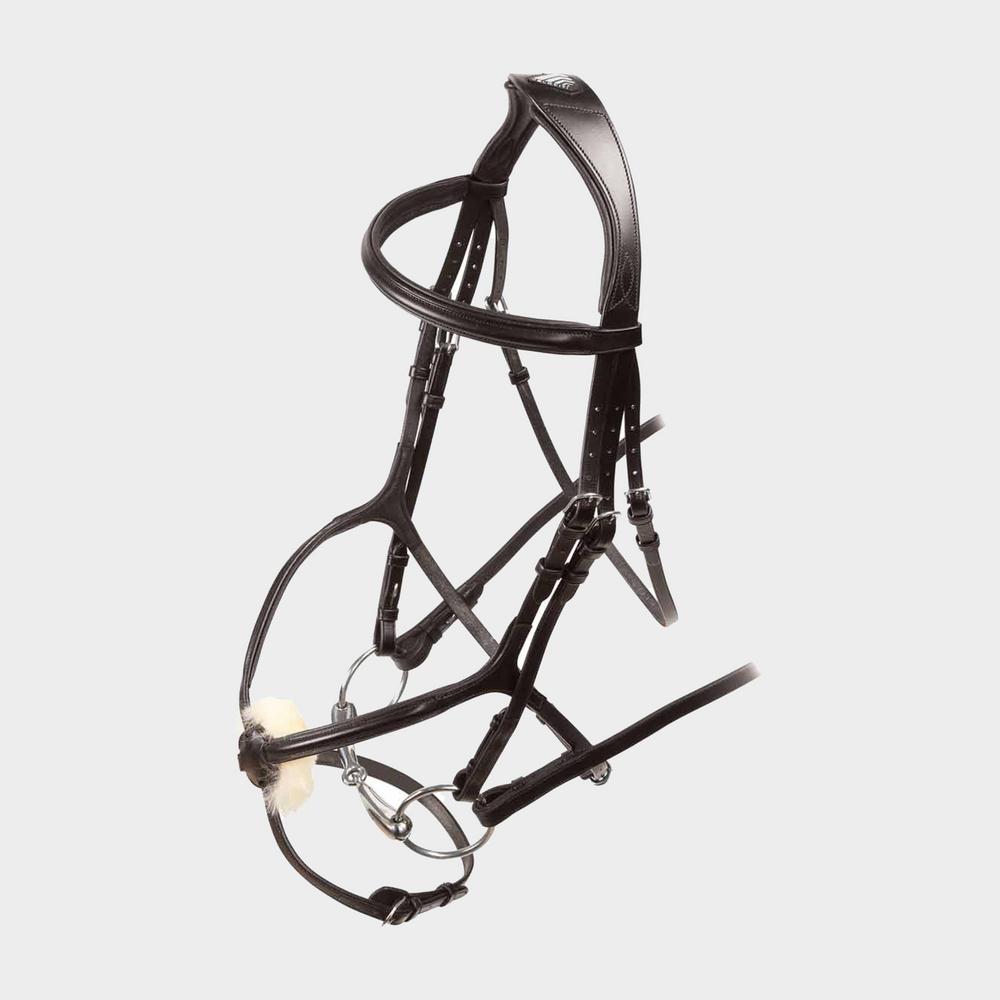
A well-fitting, comfortable bridle can transform how your horse goes, especially if you are dealing with a strong, enthusiastic ride or a sensitive head. Grackle bridles are a popular choice for jumping and fast work, and the Velociti Grackle Bridle Havana is a good example of a modern, horse-friendly design that aims to relieve pressure rather than simply strap the mouth shut.
What is a grackle bridle and why choose one?
A grackle bridle, sometimes called a Mexican noseband, uses crossed straps that fasten higher on the cheek and lower towards the chin, with a central ring on the nose. Unlike a plain cavesson or a traditional flash, this design spreads pressure across a wider area and avoids sitting over the soft cartilage at the bottom of the nose.
Riders often turn to a grackle when their horse is prone to crossing the jaw, opening the mouth, or becoming strong in open spaces and on the approach to fences. By gently stabilising the jaw, the grackle can make the contact feel more consistent, without clamping down across one narrow point.
The Velociti Velociti Grackle Bridle Havana taps into this concept with a wide, raised noseband that supports the jaw and nose while aiming to relieve pressure where the horse is most sensitive. If you are upgrading from a basic cavesson or flash, that extra stability can make your horse feel altogether more settled in front.
Inside the Velociti Grackle Bridle Havana
The Velociti Grackle Bridle Havana is built around soft, supple leather and a FreedomFit headpiece designed to support the horse across the poll, brow and nose bands. Rather than being a simple straight headpiece, it includes a poll gap and cut-out ears, so there is less bulk over the top of the head and more room around the base of the ears.
This matters more than it might sound on paper. The poll is a key pressure point, and a stiff, narrow headpiece can easily cause discomfort, leading to head tossing or resistance in the contact. By shaping the headpiece and creating some clearance, Velociti aims to reduce that pressure and absorb some of the shock from movement, particularly in disciplines where there is a lot of up-and-down motion, such as jumping and fast hacking.
Key design points include:
- Soft leather for easier break-in and improved comfort
- FreedomFit headpiece to cushion and spread pressure over the poll
- Poll gap and ear cut-out to give space around sensitive areas
- Wide, raised grackle noseband to support the jaw and nose
- Angled throat lash to help keep the bridle stable in work
- Reins included, offering a secure and flexible attachment
- Classic Havana colour to complement most saddles and breastplates
If you want a deeper dive into how this particular bridle feels in day-to-day use, you can read our full review of the Velociti Grackle Bridle Havana, where it is put through its paces in real riding conditions.
Fit and comfort: why headpiece design matters
Many horses object to bridles not because of the bit, but because of how the headpiece and browband sit. The poll is a narrow area with important ligaments and nerves; a chunky, unshaped piece of leather sitting here can cause tension and resistance.
The FreedomFit headpiece on the Velociti Grackle Bridle Havana is designed to work with the shape of the horse’s head. The poll gap reduces direct pressure, while the cut-out ear sections help the bridle sit comfortably without rubbing or crowding the ears. For horses that dislike traditional, straight headpieces, an ergonomic style like this can be a useful upgrade.
Support does not stop at the poll. This bridle is intended to support the poll, neck, brow and jaw as a system. The wide raised noseband spreads contact over a broader area of the jaw and nose, which can feel more stable and less sharp than a thinner strap. For horses that prefer a consistent, steady feel, this is often more acceptable than a narrow, tight noseband.
Choosing the right bridle style for your horse
Before settling on a grackle, it is worth stepping back and thinking about what you actually want the bridle to do. Are you trying to keep a busy mouth quieter, find more control in open fields, or simply keep your horse comfortable for everyday schooling?
Grackle bridles like the Velociti Grackle Bridle Havana tend to suit jumpers, eventers and riders who regularly hack at speed, because they offer:
- Stable jaw support for horses that cross or set against the hand
- Clear nostril area for better airflow in fast work
- A secure feel without overly tight single-point pressure
If your horse is more of an all-rounder or you focus on flatwork, you may prefer a flash style. The Velociti Dressage Flash Bridle Black, for example, is aimed more at dressage and everyday schooling, with a flash noseband that can be adjusted or used more lightly when you do not need as much jaw control.
Similarly, ergonomic flash designs like the Velociti Ergonomic Flash Bridle Black and the Velociti Ergonomic Flash Bridle Havana blend a more traditional flash noseband with shaped headpieces and thoughtful pressure relief. These can be a good compromise if you occasionally need a little extra control, but do not ride in a grackle every day.
Getting the fit right: step-by-step
Even the best-designed bridle will not help if it is incorrectly fitted. With a grackle, it is especially important to keep clear of the soft part of the nose and avoid a cramped, twisted fit.
1. Start with the headpiece and browband
Place the headpiece gently over the ears and check that the browband sits flat without pulling the headpiece forwards into the back of the ears. On ergonomic designs like the Velociti Grackle Bridle Havana, the ear cut-outs should frame the base of the ears rather than sit on them.
2. Position the noseband correctly
The central ring of the grackle should sit on the bony part of the nose, not down over the soft cartilage. As a rough guide, many riders place it a little higher than a standard cavesson would sit, then adjust so it is level and symmetrical from the front.
3. Adjust tension carefully
Fasten the crossed straps so they are snug but not tight; you should be able to slip a finger or two under each strap. Over-tightening can cause discomfort and actually encourage more resistance. The angled throat lash on the Velociti design helps keep everything stable without needing to crank the straps.
4. Check for symmetry and movement
When everything is buckled, step back and look at the bridle from front and side. The noseband should be central, the headpiece should not be twisted, and the reins should hang evenly from each side. Finally, walk and trot the horse on a loose rein to see if the bridle moves or rubs anywhere.
Comparing the Velociti Grackle Bridle Havana with similar options
If you like the idea of the Velociti Grackle Bridle Havana but are not sure it is the right model for you, it helps to look at it alongside other bridles in the same family.
Velociti Grackle Bridle Black vs Havana
The most obvious comparison is the Velociti Velociti Grackle Bridle Black. Functionally, this black version offers a very similar design, also aimed at relieving pressure with a shaped headpiece and supportive noseband. The main difference is simply colour: the Havana suits rich brown saddles, while the black model is a better match for black tack, dressage-style set-ups or riders who prefer a sharper, more modern look.
If you compete under rules where colour choice might be guided by discipline tradition, it is worth matching your bridle to the rest of your kit. For eventers and showjumpers, either Havana or black can work, so it mostly comes down to personal taste and the rest of your tackroom.
Ergonomic flash options: Black and Havana
For horses that go well in a flash but still benefit from ergonomic design, the Velociti Velociti Ergonomic Flash Bridle Black and Velociti Velociti Ergonomic Flash Bridle Havana are natural alternatives. Both use soft leather and shaped headpieces, but swap the crossed grackle straps for a more traditional flash arrangement.
Choose one of these if your horse does not need quite as much jaw control, or if you ride mainly on the flat and want a neater look in the arena. The flash can be adjusted more lightly for everyday hacking, giving you flexibility if your horse behaves differently in different environments.
Dressage-focused flash: Velociti Dressage Flash Bridle Black
Riders who focus primarily on dressage might prefer the Velociti Dressage Flash Bridle Black. As the name suggests, this model is geared towards dressage disciplines, with a style that suits the more formal look many riders want between the white boards.
It is still perfectly capable for hacking and low-level jumping, but if your main goal is a clean, smart appearance in the dressage arena, a dressage-specific flash bridle can be a better aesthetic fit than a grackle. It is also a useful option if your horse finds a grackle too encompassing or you prefer a more minimal feel.
What about breastplates?
Although not a bridle, the Salisbury 5 Point Breastplate naturally crops up for riders looking at jumping tack sets. A 5-point breastplate helps keep the saddle in place on sharp turns, big efforts and hilly ground, and it visually complements the look of a Havana bridle for those who like coordinated leatherwork.
If you are building a jumping or cross-country set-up around the Velociti Grackle Bridle Havana, pairing it with a quality 5-point breastplate is a logical next step for security and style.
Daily use, reins and rider feel
An often-overlooked part of any bridle is the reins. The Velociti Grackle Bridle Havana comes complete with Velociti reins, which are designed to provide a secure and flexible attachment. For the rider, that means a consistent grip and clearer communication, especially when your horse is keen or you are riding on variable footing.
Because the leather is described as soft and supple, you can also expect the bridle to bed in relatively quickly. That is a plus if you dislike wrestling with stiff new leather or have sensitive hands. As with any new bridle, a thorough conditioning before the first ride and a few early cleans will help it mould to both horse and rider.
To understand precisely how the reins and leather feel in practice, you can always read our full Velociti Grackle Bridle Havana review, which goes into practical riding impressions in more depth.
Care and maintenance for a long-lasting bridle
Good leatherwork is an investment, and a little care goes a long way in keeping your bridle looking and feeling its best. Sweat, saliva and arena footing can dry leather out and weaken stitching over time, so it pays to build a simple routine.
- Daily wipe-down: After riding, wipe the noseband, headpiece and reins with a damp cloth to remove sweat and grime.
- Regular cleaning: Use a dedicated leather cleaner weekly or fortnightly, depending on use, to lift deeper dirt from the pores.
- Conditioning: Apply a leather balm or conditioner lightly, paying attention to moving parts such as buckle holes, keepers and rein joints.
- Drying correctly: Allow your bridle to dry naturally in a cool, ventilated place, away from radiators or direct sunlight.
- Routine safety checks: Inspect stitching, billets and keepers regularly and replace worn parts before they fail.
Because the Velociti range uses soft leather, you should not need to overload it with oil; instead, aim for little and often. This helps the leather stay strong yet supple, and keeps the shaped headpiece and noseband sitting as intended.
When to upgrade or change your bridle
Finally, listen to your horse and your own riding goals. If you are moving into more demanding jumping, hacking over varied terrain, or simply want to improve your horse’s comfort, upgrading to an ergonomic, pressure-relieving design like the Velociti Grackle Bridle Havana can be a worthwhile step.
Equally, if your schooling and competition focus changes, it may be time to look at a flash bridle or a more discipline-specific model. The wider Velociti range – from the Grackle Bridle Black to the Dressage Flash Bridle Black and ergonomic flash options – offers plenty of scope to fine-tune your tack without losing the focus on comfort.
Whichever route you choose, a well-fitted, thoughtfully designed bridle can make everyday riding more enjoyable for you and your horse. To help you decide if the Velociti Grackle Bridle Havana is the right choice for your set-up, take a moment to explore our in-depth hands-on review and compare it with the other linked bridles before you buy.