
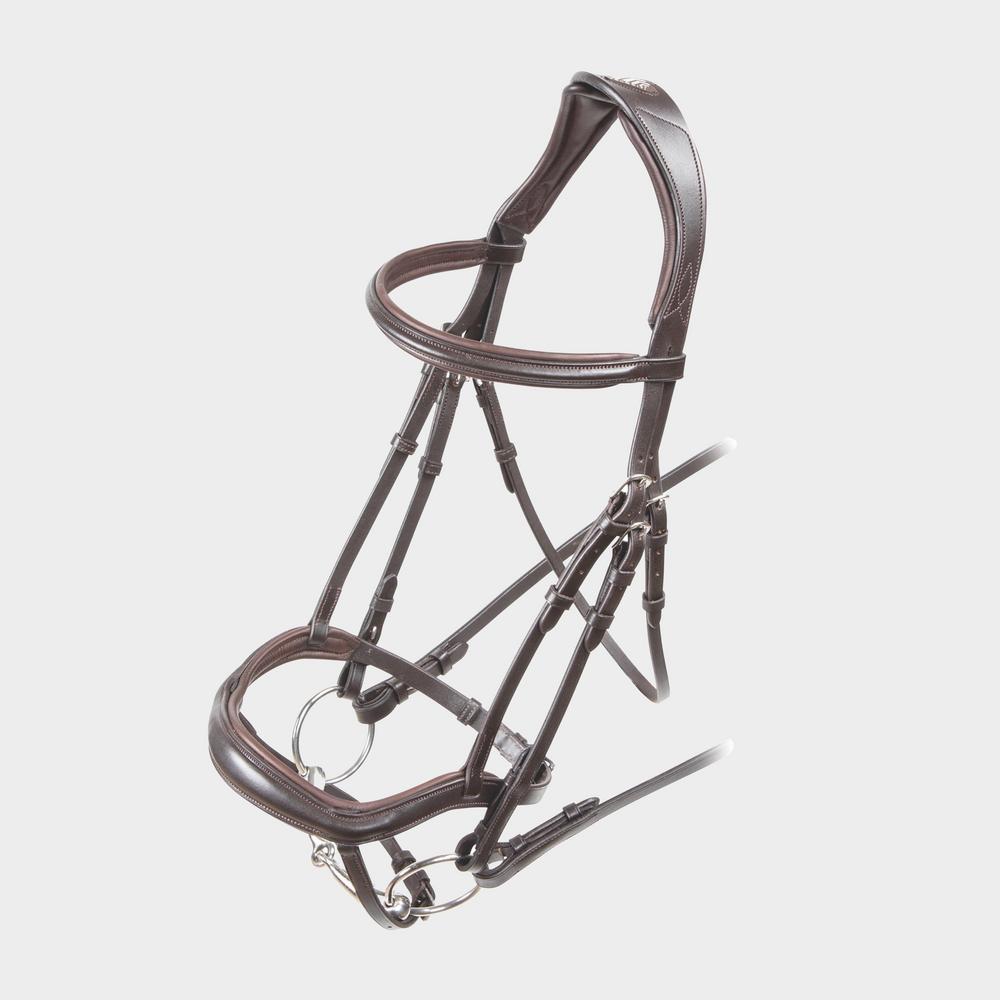
If you own a sensitive horse or you spend long hours in the saddle, the way your bridle fits can make just as much difference as your saddle. Modern anatomical designs, like the Velociti Ergonomic Flash Bridle in Havana, aim to relieve pressure on key areas of the head while still giving you reliable control.
Why bridle comfort really matters for horse and rider
A traditional bridle can put a surprising amount of pressure on the poll, nose and delicate facial nerves, especially during schooling or longer hacks. Over time, that can lead to resistance, tension and even physical discomfort. An ergonomic flash bridle is built to distribute that pressure more evenly, helping your horse relax into the contact and work more freely.
The Velociti Ergonomic Flash Bridle Havana is a good example of this new generation of tack. It’s made from soft leather, shaped specifically around the ears and poll, and designed to support the poll, neck, brow and jaw rather than restricting them. If you’d like to dig into real‑world testing, you can always read our full review of the Velociti Ergonomic Flash Bridle Havana, but here we’ll focus on how to choose and use this type of bridle effectively.
Inside the Velociti Ergonomic Flash Bridle Havana
While every horse’s head is different, the Velociti Ergonomic Flash Bridle Havana is built around a few key ideas that will suit many sensitive types. Its soft, supple leather helps reduce rubbing from the first ride, and the overall shape is anatomical rather than strictly traditional.
Anatomical headpiece and FreedomFit design
The stand‑out feature is the FreedomFit headpiece, an ergonomically shaped crown that’s designed to absorb some of the shock and movement that travels up the reins. It incorporates a poll gap and ear cut‑outs, so the leather sits around, rather than directly over, some of the more sensitive structures. For horses who dislike pressure behind the ears or who are prone to head tossing when you take up a contact, this can be a real help.
Wide raised noseband and flash attachment
The bridle includes a wide raised noseband that aims to relieve pressure on the jaw and nose by spreading it more evenly. The integrated flash design helps keep the bit stable without over‑tightening the noseband itself. This is especially useful for younger horses, those that like to play with the bit, or when you are fine‑tuning the connection in flatwork.
Angled throatlash and included reins
Small touches, like an angled throat lash, help the bridle sit more naturally along the contours of the throat without gaping. The Velociti Ergonomic Flash Bridle Havana is also supplied with Velociti reins, giving you a secure and flexible attachment straight out of the box. For riders who prefer an all‑in‑one solution, that’s convenient and saves the cost and guesswork of buying separate reins.
If you’re deciding whether these features are worth the upgrade, it’s worth taking a closer look at how the design compares to more discipline‑specific or alternative options. You can always come back to our in‑depth Velociti Ergonomic Flash Bridle Havana review for detailed ride impressions once you’ve narrowed down your shortlist.
Choosing the right bridle style for your horse
Before you commit to any new bridle, it’s worth stepping back and thinking about what you and your horse actually need from your tack. The right choice often comes down to a mix of conformation, way of going and discipline.
When an ergonomic flash bridle makes sense
- Your horse is sensitive around the poll or ears.
- You notice rubbing or pressure marks from a traditional crownpiece.
- Your flatwork involves regular contact and you want a steady, quiet connection.
- You prefer the security of a flash strap without clamping the mouth shut.
If you like the sound of the Havana colourway but ride in darker tack, the Velociti Ergonomic Flash Bridle Black offers the same overall concept in a more classic black finish that’s especially at home in the dressage or show ring.
Considering dressage‑orientated bridles
Dressage riders often look for a bridle that offers very stable contact, subtle shaping and a smart, ring‑ready look. The Velociti Dressage Flash Bridle Black leans more towards that traditional dressage aesthetic, with a flash noseband but a distinctly dressage‑friendly style. If your focus is primarily schooling and competition on the flat, or your saddle and other tack are all black, you might find this option blends better with your set‑up.
Compared with the Ergonomic Flash Bridle Havana, a dressage‑specific bridle may place more emphasis on smart looks and a certain type of noseband shape. The trade‑off is that you might miss some of the extra anatomical detailing of the FreedomFit headpiece. For some horses this doesn’t matter; for others, it can be the difference between tension and relaxation.
When to look at grackle bridles instead
If your horse is strong, crosses the jaw, or you spend a lot of time jumping and in fast work, a grackle bridle can sometimes offer a better solution than a flash. The Velociti Grackle Bridle Black and the Velociti Grackle Bridle Havana both use a figure‑of‑eight noseband design that sits higher on the nose and fastens under the jaw.
This shape is intended to discourage jaw crossing while keeping the nasal passages relatively clear, which many riders appreciate for cross‑country, hunting and showjumping. The black version partners well with modern jump saddles, while the Havana model pairs neatly with brown or tan tack. If your horse is generally polite in the hand and more on the sensitive side, the ergonomic flash design of the Velociti Ergonomic Flash Bridle Havana is often a more forgiving starting point.
Matching your bridle to the rest of your tack
Colour and style are not just about looks; they can also help you build a coherent, comfortable tack set that works for your discipline. The Havana finish of the Velociti Ergonomic Flash Bridle Havana is a dark, rich brown that looks particularly smart with brown saddles and boots.
If you want a coordinated Havana set for hacking, jumping or everyday riding, the Velociti Breastplate Havana is worth a look. A well‑fitted breastplate can help stabilise the saddle, especially on horses with a forward girth groove or a rounder build, and using matching leather keeps everything looking tidy and professional.
Getting the fit right: step‑by‑step guide
Even the most carefully designed ergonomic bridle can cause issues if it doesn’t fit correctly. Take the time to adjust each part on your horse’s head, ideally with someone experienced on hand the first time.
1. Adjusting the FreedomFit headpiece
Start with the headpiece and cheekpieces. The shaped crown of the Velociti Ergonomic Flash Bridle Havana is designed to sit behind the ears without pinching, so check that the ear cut‑outs align with your horse’s ear bases. There should be enough room for you to slide a finger under the leather at the poll without feeling sharp edges or buckles pressing into the skin.
2. Positioning the browband
The browband should sit flat without pulling the headpiece too close to the ears. If it is too short, it can drag the crown forwards, defeating the purpose of the anatomical design. Too long, and it may droop and twist. A well‑fitting browband frames the forehead neatly without gaping.
3. Fitting the noseband and flash
Position the wide raised noseband around two fingers below the cheekbones. You should comfortably fit two fingers under the main noseband and at least one under the flash strap. The flash should keep the bit stable, but your horse must still be able to chew and relax the jaw. Always check for signs of pinching near the corners of the mouth and around the nostrils.
4. Checking rein length and feel
Because the Velociti Ergonomic Flash Bridle Havana comes with reins, it’s worth checking that their length suits your discipline and horse’s neck length. You want enough rein that you aren’t gripping on the buckle, but not so much that you are constantly gathering loops. The grip and flexibility should feel secure in the hand, especially in wet or muddy conditions.
Day‑to‑day care for soft leather bridles
Soft leather is a joy to use but does need a bit of care to stay that way. Regular cleaning and conditioning will keep your Velociti bridle flexible and safe for years of riding.
Routine cleaning
- After riding, wipe sweat and dirt off the leather with a damp cloth or sponge.
- Use a mild saddle soap periodically to remove built‑up grime.
- Allow the bridle to dry at room temperature, away from radiators or direct sunlight.
Conditioning and storage
- Apply a leather conditioner or balm to keep the leather supple, focusing on flex points like the headpiece and noseband.
- Store the bridle hanging correctly on a bridle hook or rack to avoid kinks and creases.
- Periodically check stitching and holes for signs of wear, replacing any worn parts promptly.
A well‑maintained bridle not only looks smarter but also fits more consistently over time, which is crucial when you’re relying on careful anatomical shaping.
Comparing Velociti ergonomic and alternative bridles
With several Velociti options available, it can be tricky to decide which bridle best suits your horse. Here’s how the main choices relate to each other in practical terms:
- Velociti Ergonomic Flash Bridle Havana – Ergonomic headpiece with poll gap and ear cut‑outs, wide raised noseband and flash, supplied with reins, Havana colour. A strong all‑rounder for sensitive horses and riders who want extra comfort.
- Velociti Ergonomic Flash Bridle Black – Same ergonomic concept in black, ideal if you prefer a more traditional appearance for competition or have black tack.
- Velociti Dressage Flash Bridle Black – More dressage‑orientated styling, still with a flash noseband, suited to riders focused on schooling and tests rather than fast work.
- Velociti Grackle Bridle Black & Velociti Grackle Bridle Havana – Figure‑of‑eight nosebands for horses that get strong, cross the jaw or do a lot of jumping and fast work.
- Velociti Breastplate Havana – A complementary piece rather than a bridle, used to help keep the saddle in place and round out a Havana tack set.
If you’re still unsure, think about your main discipline and your horse’s behaviour in the bridle. Horses that show obvious poll or ear sensitivity are prime candidates for an ergonomic flash design like the Havana model. Those that mainly compete in dressage or jump at higher levels may be better served by one of the specialist alternatives.
Choosing the right bridle is ultimately about listening to your horse and being honest about your own riding. The Velociti Ergonomic Flash Bridle Havana offers a thoughtfully designed option for riders who want to improve comfort without sacrificing control, and it sits alongside a range of alternatives for different needs and disciplines. Explore the individual product write‑ups, including our full review of the Velociti Ergonomic Flash Bridle Havana, to help you decide which setup will keep both you and your horse happiest in the long run.