
If you’ve ever cut a walk short because of burning arches, sore heels or aching knees, you’ll know how quickly foot discomfort can ruin a day outdoors. For walkers with higher arches, the right insole can be the difference between limping back to the car and happily pushing on for another few miles.
Why high arch support matters for walking
High arches can look elegant, but biomechanically they’re not always your friend. Instead of your whole foot sharing the load, pressure tends to concentrate on the heel and ball of the foot. Over time, that can lead to sore feet, unstable ankles and even pain in the knees, hips and lower back.
An insole shaped for a high arch helps to:
- Redistribute pressure across the full length of the foot
- Cradle the heel so your foot doesn’t roll around inside the shoe
- Align your lower limbs more efficiently as you walk
- Improve comfort on long days out with a pack
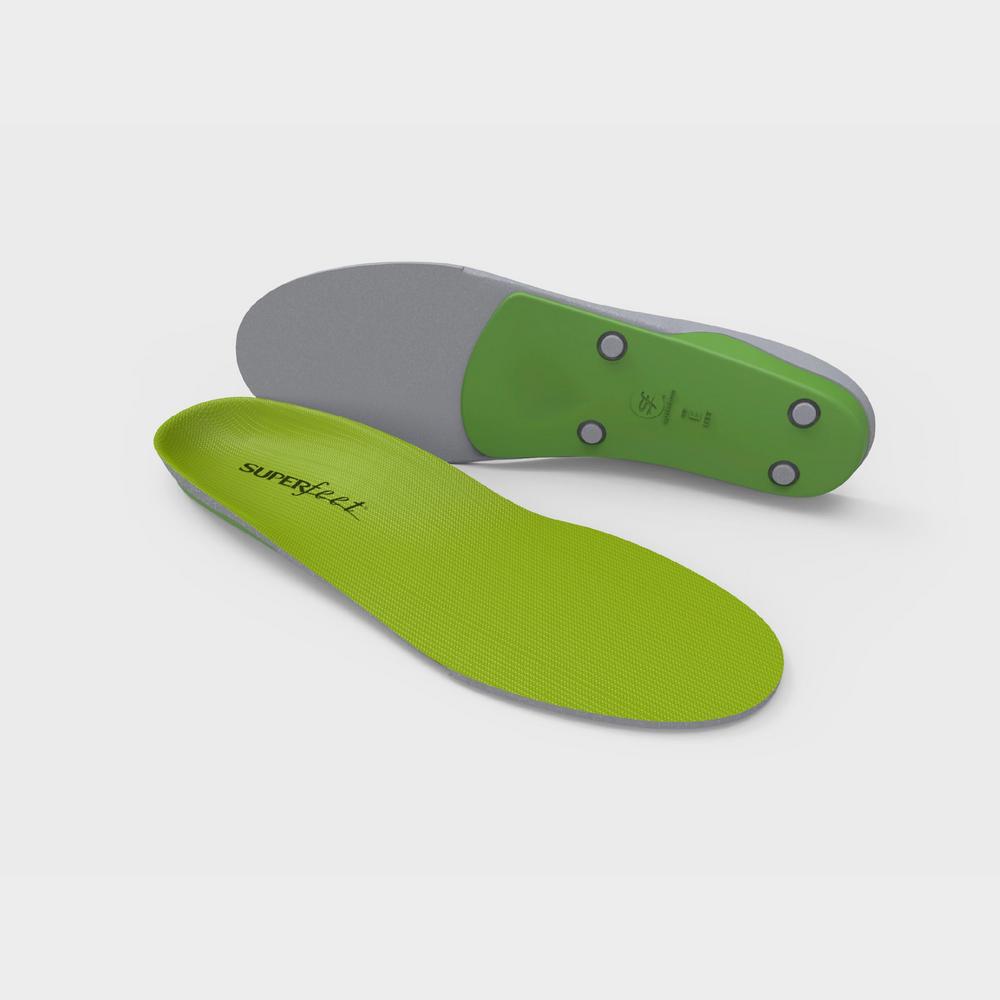
The Superfeet All-Purpose Support High Arch Insoles are designed with exactly this in mind. They’re made to replace the removable liner in roomy walking boots, walking shoes and trainers, giving more structured support than the flat foam most footwear ships with.
Key features of the Superfeet All-Purpose Support High Arch Insoles
These insoles take a fairly technical approach to what is essentially a simple aim: support your foot, consistently, all day. Here’s how the design works in practical terms.
High arch shape and firm support
The standout feature is the high arch profile. Unlike softer, flat inserts, the Superfeet All-Purpose Support High Arch uses a firm foam with a defined contour. This firmer feel can take a day or two to get used to, but it’s what keeps your foot in a stable position, especially when you’re side-hilling or descending.
Superfeet describe the underfoot cushioning as firm with maximum thickness. That means plenty of material underfoot for support, but without the marshmallow softness that can collapse on longer walks.
Deep heel cup for stability
A deep heel cup is one of the most important features in a supportive walking insole. On this model, the heel cup is shaped to work alongside your body’s natural cushioning, holding the fat pad under the heel in place rather than letting it spread outwards. On rocky descents or uneven paths, that kind of heel stability can make your feet feel more planted and controlled.
Stabiliser cap and closed-cell foam
Beneath the foam layer sits a stabiliser cap that adds structure to the rearfoot and arch. This is one of the reasons these insoles keep their shape mile after mile, instead of gradually flattening like standard liners. The foam itself is a high-density closed-cell material, chosen for long-term durability as well as support.
According to Superfeet, these insoles are built to deliver reliable support for up to around 12 months or 500 miles, whichever comes first. If you walk a couple of times a week, that’s a decent lifespan before you need to think about replacing them.
Moisturewick™ top cover
A common worry with insoles is odour and sweat build-up. Here, a Moisturewick™ top cover helps manage moisture and reduce odours, keeping things fresher inside your boots between washes. It isn’t a substitute for letting your footwear dry out properly, but it’s a useful extra line of defence on multi-day trips.
If you’d like a detailed, hands-on take on how these feel on the trail, you can read our full review of the Superfeet All-Purpose Support High Arch Insoles once you’ve finished this guide.
Choosing the right insole for walking and hiking
Not every walker needs the same level of support, and not every insole suits every foot or boot. When you’re weighing up high arch models like the Superfeet All-Purpose Support High Arch, it helps to think about three key areas: fit, firmness and footwear.
Getting the right fit and arch height
Because these insoles are specifically labelled as high arch, they’re best suited to walkers who genuinely have a more pronounced arch. If your footprint shows almost no contact along the midfoot, or you tend to feel pressure near the ball of the foot and heel rather than across the whole sole, you’re in the right territory.
Most aftermarket insoles are trim-to-fit. The usual approach is:
- Remove the existing insole from your boot or shoe
- Place it on top of the new insole and trace the outline at the toe
- Trim carefully with scissors, a little at a time
- Test the fit and adjust if needed
Make sure your toes still have wiggle room and that the insole doesn’t push your foot up so much that the boot feels tight across the top.
Firm vs soft cushioning
Walkers often assume softer automatically means more comfortable. In reality, for longer distances and rough terrain, a firm, supportive base like the Superfeet All-Purpose Support High Arch tends to work better. It stops your foot from sinking and rolling, which can be more tiring over time.
Softer insoles can feel immediately plush underfoot but may lack the structure needed to control movement in the heel and arch area. If you mainly stroll on flat paths and prioritise a cushioned feel, you might prefer a lower-profile or more padded insert. For hillwalking, backpacking or all-day use, firm support often pays off once you’re past the first couple of uses.
Matching insoles to your footwear
These Superfeet insoles are designed to replace the removable liner in roomy footwear. That means they’re ideal for:
- Traditional walking boots with enough internal volume
- Sturdy walking shoes and approach-style footwear
- Roomy everyday trainers used for long walks
They may feel too intrusive in very low-volume shoes or slim-fitting road running trainers. If your footwear already feels snug with a thick hiking sock, consider whether there’s enough space for a maximum-thickness insole before trimming and committing.
Using high arch insoles in real-world walking scenarios
Once you’ve slotted new insoles into your boots, it’s worth thinking about how to integrate them into your walking routine.
Breaking them in
Because of their structured, high arch shape and firm feel, it’s sensible to break in insoles gradually. Start with short walks around town or on local paths for the first couple of outings. Pay attention to any hot spots or areas of pressure – your feet are adjusting to a new posture, which can feel unusual, but you shouldn’t be in real pain.
Long-distance comfort and support
Where supportive insoles really shine is on longer days. The Superfeet All-Purpose Support High Arch Insoles are built with distance in mind, using a deep heel cup and durable closed-cell foam. Over 10–15 km days, the consistent support can help reduce the feeling of your feet ‘spreading’ inside the boot, which often leads to rubbing and blisters.
On steep descents, that heel stability also helps limit sliding forward in the boot, reducing pressure on your toes and keeping your nails happier on multi-day trips.
Caring for your walking insoles
Looking after your insoles is straightforward, but a bit of routine maintenance will extend their life and keep them fresher.
- Air them out: After a walk, pull the insoles out of your boots and let everything dry in a warm, ventilated area (but not directly on a radiator).
- Surface clean only: Wipe the Moisturewick™ top cover with a damp cloth and mild soap if it becomes dirty. Avoid soaking, machine washing or tumble drying.
- Rotate if possible: If you walk often, rotating between two pairs of insoles or two pairs of boots gives each set more time to dry fully between outings.
- Watch for wear: Flattened foam, cracks in the stabiliser cap, or a return of old aches are strong hints that it’s time to replace them.
Comparing alternatives: support vs warmth and layering
Supportive insoles are one part of staying comfortable on the trail. Fleece layers, for example, play a different but equally crucial role in keeping you warm and happy while you walk. If you’re sorting out your kit more broadly, it’s worth looking at how footwear support pairs with effective midlayers.
OEX Men’s Basalt Alpine Full-Zip Fleece
If you’re improving your foot comfort with structured insoles, the next logical step is to think about what you’re wearing on your upper body. The OEX Men’s Basalt Alpine Full-Zip Fleece sits firmly in the walking category and is aimed at cooler days on the hill. A full-zip design makes it easy to vent heat on the move, while still giving you enough insulation when you stop for a break.
Paired with a supportive insole such as the Superfeet All-Purpose Support High Arch, a midweight fleece like this helps create an all-round comfortable setup: your feet feel stable and your core stays warm. You can find more detail on how the Basalt Alpine performs on real walks in our OEX Men’s Basalt Alpine Full-Zip Fleece review.
Weird Fish Men’s Newark 1/4 Zip Grid Fleece
Another option to consider is the Weird Fish Men’s Newark 1/4 Zip Grid Fleece. Where the OEX fleece leans more towards technical hill use, the Newark has a casual look that works just as well on countryside strolls as it does in the pub afterwards. A grid-style fleece usually traps warmth efficiently while staying reasonably breathable.
If you mainly head out for relaxed walks but still want your feet properly supported, combining a lifestyle-friendly fleece like the Newark with a structured high arch insole is a neat balance of comfort and everyday wearability. For a closer look at how it fits and feels, take a look at our Weird Fish Men’s Newark 1/4 Zip Grid Fleece review.
Who are Superfeet All-Purpose Support High Arch Insoles best for?
Putting all of this together, the Superfeet All-Purpose Support High Arch Insoles are best suited to walkers who:
- Have clearly high arches or tend to feel pressure at the heel and ball of the foot
- Use roomy walking boots or shoes with removable liners
- Prefer firm, structured support rather than very soft cushioning
- Regularly tackle longer walks, varied terrain or carry a pack
If that sounds like you, they’re well worth considering as part of your walking setup. For more nuanced thoughts on fit, feel and real-world performance, you can always read our full hands-on review of the Superfeet All-Purpose Support High Arch Insoles as a next step.
Supportive feet, a reliable midlayer and the right footwear can transform your time outdoors. Once you’ve finished this guide, explore the linked reviews to fine-tune your kit and make every walk more comfortable from your arches right up to your shoulders.