
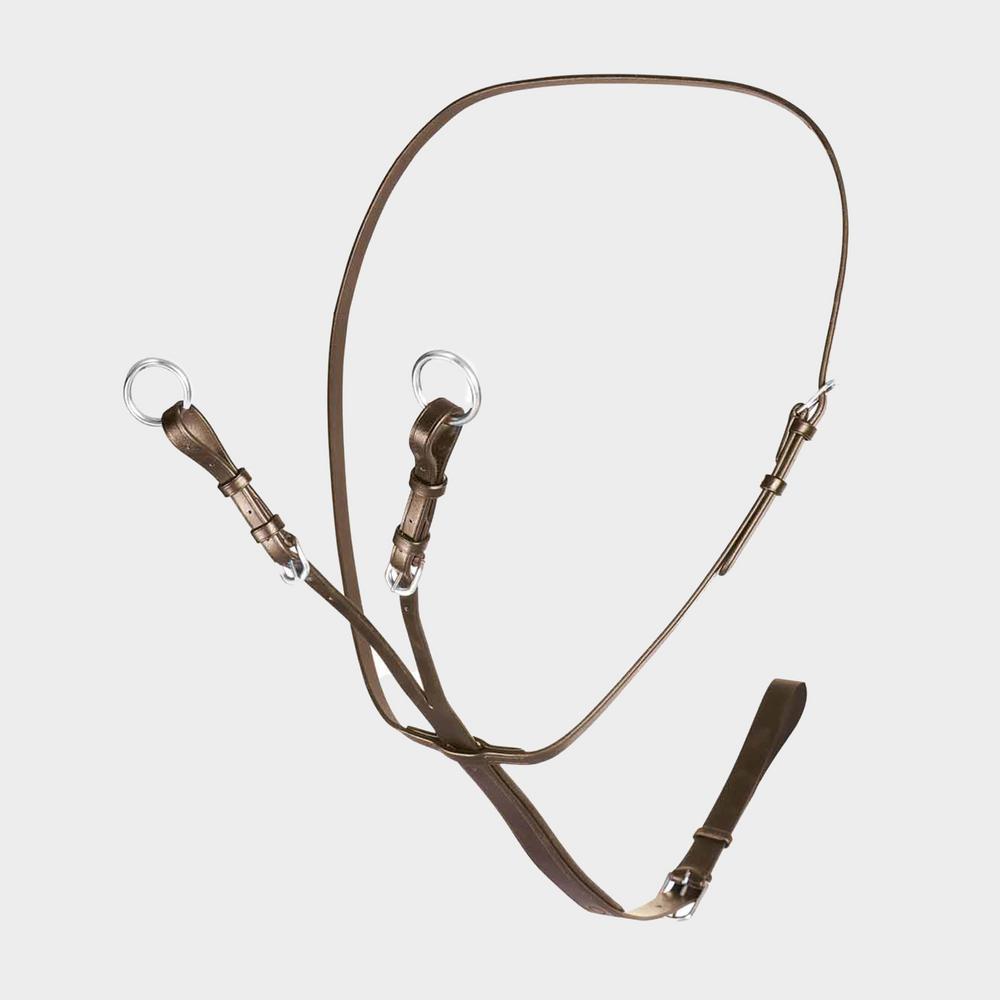
A well-fitted running martingale can transform your ride from tense and unpredictable to calm and controlled. Using the leather Velociti Running Martingale Havana as our reference point, this guide walks through what a running martingale does, how to fit it, and how it fits into a broader, practical horse riding kit.
What is a Running Martingale and Why Use One?
A running martingale is a simple piece of tack designed to help prevent your horse from raising its head so high that you lose effective contact. It doesn’t act all the time; instead, it only comes into play when the reins are lifted beyond a certain angle.
For many riders, especially those who jump, hack on forward-going horses or ride in open spaces, a running martingale offers a helpful balance of freedom and control. It allows the horse to stretch and work into the bridle, but steps in when things get a bit too enthusiastic.
The Velociti Running Martingale Havana: Key Features
The Velociti Running Martingale Havana is a classic, leather running martingale finished in a rich Havana brown. It’s cut and crafted from high-quality leather and paired with sleek stainless steel fittings, which makes it suitable for day-to-day riding as well as smarter outings.
- Traditional running martingale design
- High quality leather construction
- Stainless steel fittings for strength and longevity
- Adjustable straps at the girth, neck and martingale fork
- Havana colour to match brown tack
Those multiple adjustment points are genuinely useful. They allow you to fine-tune the fit for different horses, seasonal changes in condition and even minor saddle or girth changes. If you’d like a deeper dive into how it performs in regular use, you can read our full review of the Velociti Running Martingale Havana.
How to Fit a Running Martingale Correctly
Correct fitting is vital. A badly adjusted martingale can be uncomfortable for your horse and counterproductive in your schooling.
1. Start at the Girth
Attach the main strap of your running martingale to the girth (or girth straps, depending on the design). On the Velociti Havana, the girth section is adjustable, so you can position the chest piece comfortably in the centre of the horse’s chest, not pulling forwards or hanging too low.
2. Adjust the Neck Strap
The neck strap should sit in front of the shoulder, not too close to the throat and not so far back that it interferes with the saddle. You’re aiming for a hand’s width in front of the wither. On an adjustable leather model like the Velociti, it’s easy to make small changes to find that sweet spot.
3. Set the Length of the Fork
The classic check is that, when the horse’s head is in a normal position, the rings of the martingale should reach to just about the level of the throatlash. Shorter than this and the martingale will be permanently engaged; longer and it won’t do much at all.
Once you’ve clipped the reins through the rings (with martingale stops on the reins), step back and look at the overall picture. The martingale should sit tidy against the chest, not bowing away, and the rings should be able to slide freely.
Leather vs Synthetic: Why Quality Matters
Leather remains a popular choice for running martingales because it is strong, repairable and, with care, very long-lasting. The Velociti Running Martingale Havana uses high quality leather, which means it will generally soften and mould to the horse’s shape over time while retaining enough structure to sit neatly.
Stainless steel fittings add to the durability. They resist rust and cope well with typical British weather – from rainy schooling sessions to damp early-morning hacks. If you expect your gear to live in a tack room that isn’t perfectly dry, stainless fittings are well worth having.
For more observations on the finish and feel of the leather, you can read our in-depth Velociti Running Martingale Havana review.
Matching Your Martingale to the Rest of Your Tack
Colour and style aren’t just about looks; a well-matched bridle, saddle and martingale tend to sit and move together better. The Havana shade of the Velociti martingale pairs naturally with darker brown saddles and bridles, making it a good choice for riders who prefer brown tack or compete in more traditional set-ups.
If you run mostly black tack, it’s worth considering the Velociti Running Martingale Black, which offers a similar design in a black leather finish. You can get a better sense of how that option compares by reading our Velociti Running Martingale Black review.
Comfort, Control and Horse Welfare
A running martingale should never be a substitute for correct training, but it can be a valuable tool when used sympathetically. A well-fitted leather model such as the Velociti Havana will usually sit quietly against the horse when not in use, stepping in only when needed to discourage sudden, upward head movements.
Always watch how your horse goes when you first introduce or readjust a martingale. You’re looking for relaxed, rhythmic movement and an easy acceptance of the contact. If you notice tension, head tossing or resistance, revisit your fitting and ask a knowledgeable coach or fitter for advice.
Building a Practical Riding Kit Around Your Martingale
Your martingale is only one part of a practical, comfortable riding set-up. What you wear in the saddle matters just as much as what your horse wears, especially if you’re spending long hours schooling or out on the trails.
Half Chaps for Everyday Riding
Good lower leg support and grip can make your rein aids steadier and more consistent, which in turn works hand in hand with your martingale. The Moretta Adults Amara Half Chaps Black are a versatile option for riders who prefer to ride in short boots but still want that close-contact feel. You can find more detail on their fit and design in our Moretta Adults Amara Half Chaps Black review.
If you ride in brown boots or simply prefer a warmer, more traditional look, the Moretta Adults Amara Half Chaps Brown are the natural alternative. They pair especially well with brown leather tack, including the Havana Velociti martingale. For a closer look at how they perform day to day, take a look at our Moretta Adults Amara Half Chaps Brown review.
Breeches That Work With Your Tack and Aids
Leg stability also starts with what you wear on your legs. Breeches with carefully placed grip panels can help you maintain a consistent position, which keeps your hands quieter and your aids clearer when riding in a martingale.
The Aubrion Women’s Thompson Knee Patch Breeches are designed with this in mind, offering knee patch grip where you need it most. If you often find yourself slipping in the saddle, it’s worth seeing how they compare to your current breeches – our Aubrion Thompson breeches review goes into more detail.
Storing and Protecting Your Tack
Good storage is an underrated part of tack care. Leaving leather gear like the Velociti Running Martingale Havana in a damp corner can undo all your careful cleaning and conditioning.
A simple, practical solution is a dedicated storage bag for rugs and soft goods, which helps keep the tack room tidy and reduces the amount of dust and damp circulating around your leatherwork. The Shires Rug Storage Bag is a straightforward way to keep rugs organised and off the floor. To see how much it holds and how tough the materials feel in real life, read our Shires Rug Storage Bag review.
Leather Care Tips for a Long-Lasting Martingale
The better you care for your running martingale, the more comfortable and reliable it will be. Quality leather, such as that used on the Velociti Havana model, responds well to a simple, regular care routine.
- Daily wipe-down: After riding, wipe away sweat and dirt with a damp cloth or sponge.
- Regular cleaning: Use a suitable leather cleaner every few rides, especially after wet or muddy sessions.
- Condition sparingly: Apply leather balm or conditioner when the leather feels dry, paying particular attention to flex points.
- Dry naturally: If the martingale gets wet, allow it to dry at room temperature, away from direct heat.
- Check stitching and fittings: Inspect buckles, rings and stitching routinely for signs of wear.
Well-maintained leather not only looks better, it also moves more softly over the horse’s coat and is less likely to rub or pinch.
When a Running Martingale Might Not Be the Answer
Although a running martingale can be a real help, it is not a cure-all. If your horse is consistently resistant, hollowing, or showing signs of discomfort, it’s important to look at saddle fit, teeth, back health and schooling before reaching for more aids.
Used as part of a thoughtful, horse-centred training approach, a refined leather aid like the Velociti Running Martingale Havana can support your work. Used in isolation, it may only mask underlying issues, so it’s always worth taking a holistic view.
Choosing Between Havana and Black, and Other Alternatives
When deciding between the Havana Velociti martingale and the black version, the choice often comes down to your existing tack and personal preference. If your saddle and bridle are brown, the Havana option will blend seamlessly; if they are black, a matching black martingale will give a neater, more unified look.
Beyond colour, consider the bigger picture of your riding kit. Half chaps from Moretta, breeches from Aubrion and storage solutions from Shires all play their part in how effective and enjoyable your time in the saddle is. Leather aids like the Velociti martingale work best when supported by a stable rider position, comfortable clothing and tidy, well-cared-for tack.
Whether you are refining your horse’s way of going or upgrading your everyday riding kit, it’s worth taking the time to understand how each piece works together. Start with a closer look at your chosen martingale, then explore the linked reviews to see how boots, breeches and storage options can round out a practical, comfortable horse riding set-up.