
Putting together a smart, comfortable show outfit for a young rider can feel like a juggling act. You want something that looks the part in the ring, lets them move freely in the saddle, and stands up to the mud, hay and hustle of a typical British show day. A well-chosen kids’ tweed jacket can do all of that in one hit.
Why a tweed show jacket works so well for young riders
Tweed has long been a favourite in the show ring because it’s practical, forgiving and timeless. For children, it brings a classic, polished look without being overly formal or fussy. The right jacket should help your child feel proud and ring-ready, but still comfortable enough to mount, dismount, jump and hack to the warm-up without restriction.
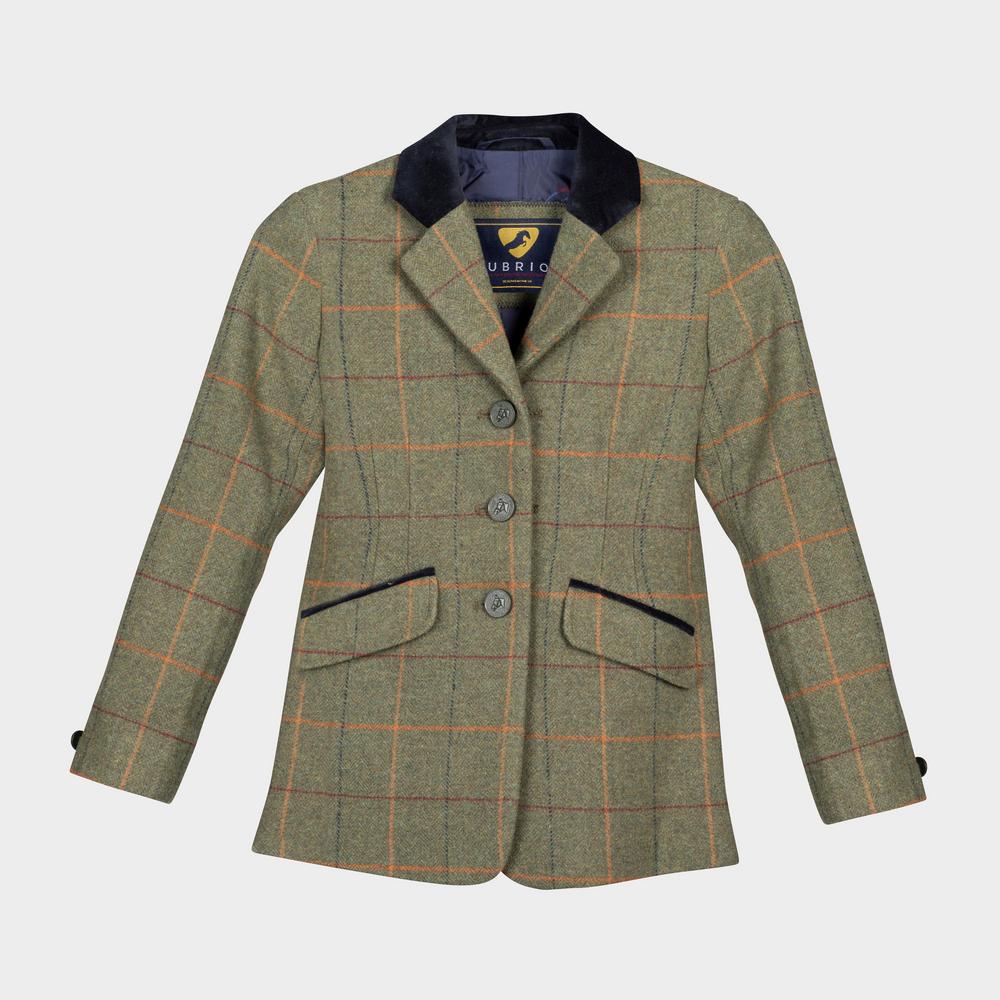
The Aubrion Kids’ Saratoga Tweed Jacket in Red/Yellow/Blue Check is a good example of a modern take on a traditional style. It combines the structure and smartness you want for competition with fun details and a colourful check that still looks perfectly at home in the show ring. If you want more hands-on impressions, you can always read our full review of the Aubrion Kids’ Saratoga Tweed Jacket as a follow-up to this guide.
Key features to look for in a children’s tweed show jacket
Whether you’re eyeing up the Aubrion Saratoga or another kids’ show jacket, there are a few details that make a real difference to comfort and appearance.
Tailored fit without restricting movement
A smart show jacket should sit close to the body, but not feel tight. The Aubrion Kids’ Saratoga Tweed Jacket is described as a tailored, traditional cut, which is exactly what you want: neat lines that look sharp in photos, paired with enough room for a shirt and perhaps a thin base layer underneath.
When you’re trying jackets on your child, check they can:
- Lift their arms as if holding reins without the fabric pulling across the shoulders
- Twist gently at the waist without the buttons straining
- Squat or sit to mimic mounting without the jacket riding up too far
Thoughtful details that make a difference in the ring
Small design touches can help a jacket sit better and look smarter. On the Aubrion Saratoga, features such as:
- Double rear vents – help the jacket drape neatly over the saddle and move with the rider
- Velvet trim collar and pockets – add a traditional, show-ready finish that frames the upper body
- Two flap pockets – practical for small show-day essentials while keeping the silhouette clean
- Double fastening – allows flexibility for unisex wear and can fine-tune the fit at the front
- Horse-themed buttons and pheasant print lining – fun yet subtle personal touches kids often love
These kinds of features aren’t just about looks; vents and a proper fastening system help the jacket sit flat when your child is in the saddle and moving around the showground.
Traditional look with a modern twist
A classic tweed check will always be in style, but a bit of colour can give your child confidence and presence in the ring. The Red/Yellow/Blue check on the Aubrion Saratoga is bright enough to feel special without clashing with neutral jodhpurs or standard show hats and boots.
If you’re unsure how bold to go, consider:
- What discipline your child rides in most often
- How traditional their usual classes are
- Whether you’d like the jacket to double as a smart hacking or pony-club piece
Getting the right fit: measuring and trying on
Kids grow fast, so it’s tempting to size up heavily. For a show jacket though, going too big can spoil the line and even get in the way when riding. The goal is a balance between growing room and a polished silhouette.
How to measure your child for a show jacket
Use a soft tape measure and note down:
- Chest – around the fullest part, under the arms
- Waist – roughly where the jacket will naturally sit
- Back length – from the base of the neck to where you’d like the hem to finish (usually around the hip)
- Sleeve length – from the top of the shoulder to the wrist bone
Compare these with the brand’s size chart and, if possible, order two sizes to try at home. The right size should sit close to the body, cover the waistband of jodhpurs and sit smoothly across the shoulders without creasing or straining.
Signs the jacket is too small or too big
Too small:
- Buttons pull, leaving gaps when your child raises their arms
- The collar digs into the neck or stands away awkwardly
- Sleeves ride well above the wrist when the reins position is mimicked
Too big:
- Shoulder seams droop down the arm
- Excess fabric bunches at the waist or across the back
- Hem covers too much of the seat and bunches on the saddle
A tailored design like the Aubrion Kids’ Saratoga Tweed Jacket will always look best when the size is right; the cut is meant to follow the body without clinging.
Building a complete kids’ show outfit around a tweed jacket
Once the jacket is sorted, it’s time to think about the rest of the kit. A well-coordinated outfit helps your child feel confident and looks more professional in the ring.
Jodhpurs, boots and hat
For a traditional tweed-based look, cream or beige jodhpurs are a solid starting point. Pair them with polished jodhpur boots and smart gaiters or long riding boots, depending on the class and your child’s age. A correctly fitted, safety-standard riding hat is non-negotiable; stick to a neutral colour that complements the tweed and velvet trim on the jacket.
Bridles and breastplates to complement the outfit
Well-presented tack can elevate the whole picture. While the jacket is the focal point on the rider, the pony’s bridle and breastplate can subtly tie everything together.
For riders whose ponies need a bit more security over fences or on the cross-country course, a breastplate can improve both style and stability. The Salisbury 5 Point Breastplate is the kind of piece that offers solid support while looking smart enough for competition when fitted and adjusted correctly.
If your child’s pony goes best in a grackle bridle, options like the Velociti Grackle Bridle in Black or the Velociti Grackle Bridle in Havana can be matched to boots and gloves. For more traditional or dressage-focused classes, an alternative such as the Velociti Dressage Flash Bridle may sit more comfortably alongside a tweed or competition jacket, depending on the rules of the class.
Inside the Aubrion Kids’ Saratoga Tweed Jacket
The Aubrion Saratoga is pitched as a child’s show jacket with a traditional cut and a modern twist. Looking at the key design points can help you decide if it’s the right style of jacket for your young rider.
Traditional styling for the show ring
The jacket’s tailored fit and classic shape make it a natural choice for general showing, pony club and local competitions. Features like the velvet trim collar and pockets and horse-themed buttons give it that show-ready feel without crossing over into overly formal adult tailoring.
The check print moves away from very plain tweeds, adding interest and personality that often appeals to younger riders. It’s smart enough for judges, but distinctive enough that your child will enjoy wearing it in photos and prize-giving ceremonies.
Comfort features for long days at shows
The double rear vents are a practical inclusion, allowing the jacket to open slightly over the saddle, so your child doesn’t feel restricted or sit on the fabric. A thoughtfully chosen lining, like the pheasant print mentioned in the specs, usually helps the jacket slide easily over shirts and base layers, reducing bunching and friction.
The double fastening is particularly handy for growing riders. It gives a little leeway to adjust how the jacket sits at the front, and the unisex-friendly setup means it can work for both boys and girls in the household if you like to pass kit down.
If you’re curious how all of this translates into real-world use, you can always dive into our in-depth review of the Aubrion Kids’ Saratoga Tweed Jacket after this guide.
Comparing the Aubrion Saratoga with other key equestrian pieces
While the Aubrion Kids’ Saratoga Tweed Jacket is all about rider presentation, many of the alternative products you’ll consider sit on the pony rather than the rider. It’s helpful to think of the whole picture as a system: the jacket frames your child, and the tack frames the pony.
Salisbury 5 Point Breastplate – security and style
A 5-point breastplate, such as the Salisbury Salisbury 5 Point Breastplate, is often used in jumping or eventing to help keep the saddle in place. It distributes pressure across several points of contact, which can aid stability on energetic ponies or over bigger fences.
From a style perspective, a clean, well-conditioned leather breastplate sits nicely against the line of a traditional tweed jacket, giving a cohesive look. If your child competes in working hunter or show jumping as well as showing, it’s worth thinking about how their jacket and breastplate will look together in photos and presentations.
Velociti grackle and flash bridles – function meets presentation
The bridle choice depends far more on the pony’s way of going than aesthetics, but appearance still matters in the ring. The Velociti Grackle Bridle in Black and the Velociti Grackle Bridle in Havana give you colour options to suit different coats and boot colours. Havana leather often pairs particularly well with tweed and brown or tan boots for a coordinated, traditional look.
For riders focusing more on flatwork or dressage, a piece like the Velociti Dressage Flash Bridle Black provides a tidier, more straightforward profile that still looks sharp when matched with a tailored tweed or a more formal dressage jacket. Whichever you choose, keeping the leather cleaned and conditioned will make as much difference to the final picture as the jacket itself.
Care and maintenance: keeping a kids’ tweed jacket looking smart
Show days can be messy; mud, hay and slobber are all part of the package. Caring properly for a tweed jacket will extend its life and help it stay sharp from class to class.
After-show routine
Once you’re home, follow a simple routine:
- Brush off dried mud and loose hair with a soft clothes brush
- Spot-clean small marks with a damp cloth and mild detergent
- Hang the jacket on a wide hanger to help it regain its shape
- Air it out in a dry room before storing to avoid damp smells
Always check the care label before washing; many tweed jackets are dry-clean only, and routine brushing and spot cleaning will usually keep them fresh between deeper cleans.
Storing between seasons
When the show season winds down, store the jacket in a breathable garment bag rather than plastic. This protects it from dust and moths while letting the fabric breathe. Keep it in a cool, dry cupboard away from direct sunlight to prevent colour fading.
Encouraging children to help hang and store their jacket properly is a good way to teach them responsibility for their kit – and it means the jacket is far more likely to be ready to go next season without frantic last-minute cleaning.
Balancing budget, durability and style
Outfitting a child for the show ring can quickly add up, especially once you factor in tack such as breastplates and bridles. The key is to invest in the pieces that make the biggest difference to comfort and presentation, then build around them gradually.
A tailored tweed jacket like the Aubrion Kids’ Saratoga sits firmly in the “high impact” category: it’s front and centre in every photo and can last through multiple seasons if cared for well and passed down between siblings. By pairing it with well-chosen tack such as a quality breastplate or a smart, well-fitted bridle, you can create a coordinated, professional look without needing a vast wardrobe.
However you build your child’s show outfit, starting with a comfortable, well-cut jacket will set the tone for the whole ensemble. Once you’ve found a style you like, such as the Aubrion Kids’ Saratoga Tweed Jacket, it’s worth exploring more detailed impressions, fit notes and real-world use in dedicated product write-ups – so when you’re ready, take a look at the linked reviews to help you fine-tune your final choices.