
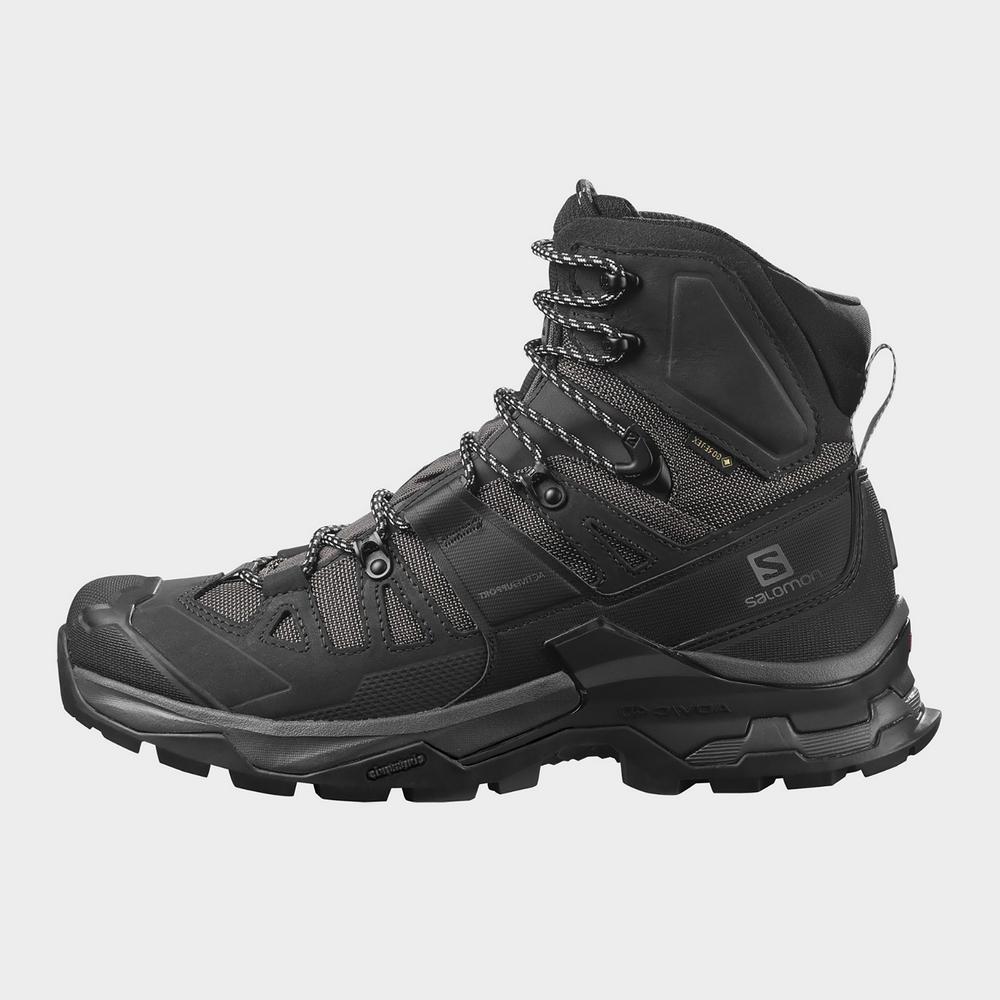
If you hike regularly in the UK, you quickly learn that a solid pair of waterproof boots is worth their weight in gold. The Salomon Men’s Quest 4D 4 GORE-TEX Hiking Boot sits firmly in that all-day, four-season hillwalking category, blending traditional leather with modern support and weather protection. This guide walks you through where the Quest 4D 4 GTX fits in the world of men’s hiking boots, how to choose the right style for your walking, and how to get the best from a leather GORE-TEX boot in British conditions.
Understanding the Salomon Quest 4D 4 GORE-TEX
The Quest 4D 4 GTX is designed as a supportive, high-ankle hiking boot for men who spend a lot of time on rough ground. It combines nubuck leather with a GORE-TEX Performance Comfort membrane, so your feet are protected from wet grass, boggy paths and prolonged rain. This is not a casual walking shoe: it is built with multi-day treks, big Lake District rounds and Scottish Munros in mind.
Key elements that define the boot include:
- Nubuck leather upper – naturally water-resistant and durable, ideal for repeated use on rocky and muddy trails.
- Waterproof GORE-TEX membrane – a highly breathable layer that seals water out while allowing sweat vapour to escape.
- SensiFit cradle – wraps the midfoot and works with the lacing system to hold the foot securely in place.
- Moulded OrthoLite insole – gives extra cushioning underfoot for long days on the hill.
- Protective mudguards and toe cap – shield your feet from kicked stones, scree and sloppy paths.
- Active Support around the ankle – focused support where you need it, especially with a loaded pack.
If you want a deep dive into fit, on-foot feel and long-term durability, you can read our full review of the Salomon Men’s Quest 4D 4 GORE-TEX Hiking Boot, which covers hands-on use in a range of UK conditions.
Is a boot like the Quest 4D 4 GTX right for your walking?
Before focusing on specific models, it helps to be honest about the kind of walking you actually do. The Quest 4D 4 GTX is an all-rounder tilted towards more demanding use, so it is worth asking a few questions:
- Terrain: Are you mainly on rocky paths, tussocky moorland and steep descents, or gentle waymarked trails and woodland tracks?
- Distance: Do you often go beyond 10–15km, or are your walks typically a couple of hours long?
- Loads: Do you carry a full multi-day pack, or just a daypack with waterproofs and lunch?
- Season: Are you out in all weathers and through winter, or mostly fair-weather walking?
If your answers lean towards rougher ground, heavier packs and year-round use, a supportive leather boot with a high ankle and waterproof lining makes a lot of sense. The Active Support ankle, traditional lacing eyelets and sturdy mudguards of the Quest 4D 4 GTX are tailored to that kind of walking.
On the other hand, if most of your outings are short, low-level walks on dry paths, such a boot may feel like more boot than you truly need. In that case, you might consider a lighter fabric boot or even a walking shoe, keeping a more supportive leather boot in mind for future trips as your hill days grow.
Key features explained: what really matters on the hill
Waterproofing and breathability
The Quest 4D 4 integrates a GORE-TEX Performance Comfort Footwear membrane. In practical terms, that means:
- Rain and surface water stay outside, provided you keep the ankle cuff covered and avoid full submersion.
- Sweat vapour can diffuse outwards, so your socks are less likely to feel clammy on long climbs.
Because the nubuck leather is also treated with a water-repellent finish, water tends to bead and run off rather than soaking into the outer. Keeping that treatment topped up is crucial to comfort, as a soaked outer can feel heavy and makes it harder for moisture to escape through the membrane.
Support and fit
Salomon’s SensiFit system works from the midsole up to the lacing, gently cradling your foot so it does not slide forward on descents. Paired with the high ankle and Active Support structure, it is aimed at keeping your joints aligned and reducing fatigue when you are tired or carrying a pack.
The traditional lacing system with eyelets is a plus for many hillwalkers. It allows you to fine-tune tension across the forefoot, midfoot and ankle separately: looser for flat valley tracks, tighter for steep scrambles or cambered sheep trods. The gusseted tongue helps keep debris out while also staying centred as you walk.
Cushioning and comfort
The moulded OrthoLite insole provides noticeable cushioning underfoot. It is designed to be soft yet supportive, making long days on stony tracks more forgiving. Combined with the mesh and textile lining, the inside of the boot feels softer against your foot than the tough leather exterior might suggest.
Many walkers like to experiment with aftermarket insoles once they know how a boot fits. If you have particularly flat arches, or you favour a more structured footbed, keep in mind that the OrthoLite insole is removable so you can customise the internal feel if needed.
Leather vs fabric hiking boots: which should you choose?
The Quest 4D 4 GTX uses nubuck leather for its outer. Compared with fabric boots, that choice carries a few clear trade-offs.
When leather boots shine
- Durability: Leather generally stands up longer to repeated flexing, rock abrasion and heather bashing.
- Weather resistance: With good care, leather can shrug off rain, bog and wet snow remarkably well.
- Support: Leather uppers often feel more structured and stable around the ankle, especially after break-in.
Where fabric boots win
- Weight: Fabric boots can feel lighter and more agile, especially on hot days.
- Break-in: They usually feel comfortable out of the box with a shorter adaptation period.
- Breathability: More mesh and textile can help your feet feel cooler in summer.
If you plan to take on demanding, multi-season hill days, a leather GORE-TEX boot like the Quest 4D 4 is a strong candidate. If your ambitions are more about speedy summer hikes or you value a trainer-like feel, looking at lighter synthetic boots or shoes might be more sensible.
How to get the right fit in men’s hiking boots
A boot can have all the right tech and still be wrong for you if the fit is off. Here is a simple approach when trying on something like the Quest 4D 4 GTX:
- Try with your usual hiking socks. Sock thickness and material make a big difference to volume and feel.
- Check toe room. With the laces done up, stand on a downhill slope or simulate one by tapping your toes forward in the boot. Your toes should not hit the front.
- Watch for heel lift. Walk up stairs or a ramp; your heel should stay planted with minimal movement.
- Lace in zones. Adjust forefoot, midfoot and ankle tension separately using the eyelets to prevent pressure points.
- Give it time. Wear them indoors for a while to see if any hot spots develop before committing to a big day out.
If you want to know more about how the Quest 4D 4 GTX feels once broken in, you can read our full review of the Salomon Quest 4D 4 GORE-TEX, which focuses specifically on long-term fit and comfort.
Caring for nubuck leather GORE-TEX boots
Looked after properly, a boot like the Salomon Quest 4D 4 GTX can last for many seasons. Here is a straightforward care routine that suits most nubuck leather hiking boots with a waterproof membrane.
After each walk
- Loosen the laces, remove the insoles and let the boots dry at room temperature.
- Keep them away from direct heat sources like radiators or fires, which can crack the leather and damage adhesives.
- Once dry, brush off mud and grit using a soft brush, paying attention to the welt and around the eyelets.
Regular cleaning and reproofing
- Use a cleaner specifically designed for leather or nubuck; avoid harsh detergents.
- Apply a water-repellent treatment recommended for your boot type to maintain the beading effect on the outer.
- Allow the boots to dry naturally again before use.
This routine not only keeps the leather looking good, it also helps the GORE-TEX membrane breathe properly by preventing dirt and oils from clogging the outer layers.
When a boot like this might be overkill
It is easy to assume you need a full leather, high-ankle boot for any walk, but that is not always the case. The Quest 4D 4 GTX is built for commitment: long routes, unstable terrain and wet weather. For lowland paths, casual dog walks or occasional summer outings, a mid-cut or low-cut walking shoe with a simpler design might be more comfortable, cheaper and require less break-in.
Signs that your boots are more than you need include: feeling stiff and heavy on easy paths, your ankles getting sore from high cuffs on flat ground, and rarely using the full support they offer. Matching your footwear to your walking style means you will enjoy your time outside more, with less fatigue and faff.
Comparing alternatives and thinking about your next boot
While our focus here is the Salomon Men’s Quest 4D 4 GORE-TEX Hiking Boot, it sits within a broader field of men’s hiking footwear that share some traits: waterproof membranes, supportive ankle cuffs and protective features like toe caps and mudguards. When comparing alternatives, keep these questions in mind:
- How much ankle support do you really need? High-cut boots like the Quest 4D 4 GTX offer more support but can feel warmer and less agile.
- Is long-term durability or low weight more important? Leather usually wins on toughness, while lighter fabrics win on saving grams.
- Do you prefer a traditional feel or a more trainer-like ride? Some boots feel closer to running shoes, others more like classic trekking boots.
Some alternatives lean harder into lightness and speed, while others double down on stiffness and crampon compatibility for winter mountaineering. The Quest 4D 4 GTX occupies that sweet spot in between: substantial and protective, but still aimed squarely at three- and four-season hillwalking rather than technical climbing.
If you are not sure which way to jump, it can help to own two pairs: a robust leather GORE-TEX boot for winter and big days, and a lighter shoe or boot for gentler summer walks. This approach spreads wear and tear and lets you tailor your footwear to the day’s plan.
Sustainability and PFC-free finishes
The Quest 4D 4 GTX is listed as PFC free, which matters if you are paying attention to the environmental impact of your kit. PFCs (perfluorinated compounds) are often used in durable water-repellent coatings, but they can be persistent in the environment. Choosing PFC-free boots – and matching them with PFC-free aftercare products – is a small but meaningful step if you walk in wild places and want your gear choices to reflect that respect.
Putting it all together: building your hiking footwear system
Think of the Salomon Men’s Quest 4D 4 GORE-TEX Hiking Boot as the backbone of a year-round hillwalking setup rather than a one-size-fits-all solution. It is ideal as your go-to for:
- Long days in the hills in mixed weather.
- Multi-day treks with a reasonably heavy pack.
- Wet, muddy conditions where leather and GORE-TEX really earn their keep.
Pair it with good quality merino or synthetic socks, sensible lacing and regular leather care, and you will have a boot that can carry you through a huge range of UK walking. For full on-foot impressions, durability notes and sizing guidance, make sure you check our in-depth review of the Salomon Men’s Quest 4D 4 GORE-TEX Hiking Boot before you buy.
However you choose to kit out your feet – from stout leather boots like these to lighter alternatives – taking the time to match your footwear to your ambitions will pay off in comfort, confidence and more enjoyable days on the hill. Use the guidance here, explore the linked reviews, and you will be well on your way to finding the right boot for your next adventure.