
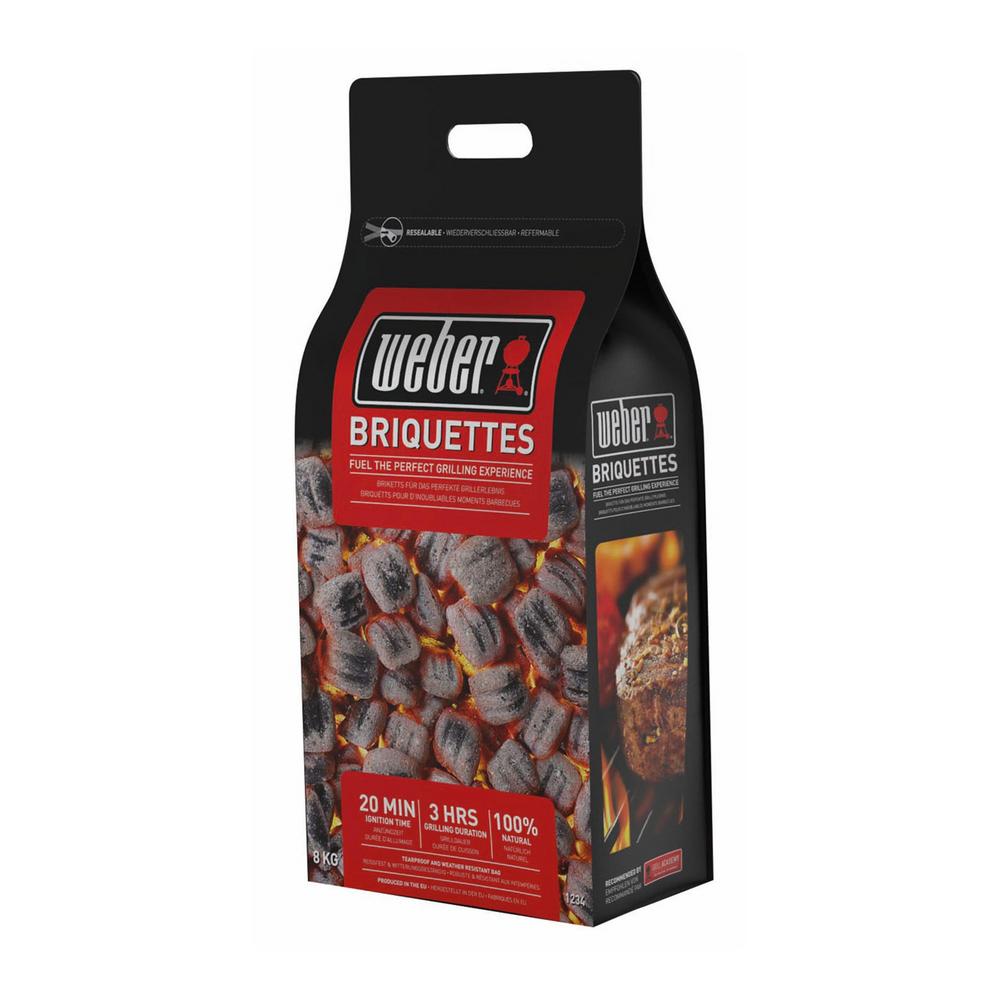
If you love the flavour of real charcoal but hate fighting with damp briquettes and unpredictable heat, getting your fuel choice right makes all the difference. The Weber Briquettes 8kg pack is designed to offer clean-burning, consistent heat for relaxed outdoor cooking, whether you’re grilling in the garden or camping with friends.
Why charcoal choice matters for better BBQs
Many people obsess over the barbecue itself, but the fuel you put in it has just as much impact on the results. Good briquettes should light reliably, reach cooking temperature in a sensible time and hold a steady heat for long enough to cook your food without drama.
The Weber Briquettes 8kg are made from natural ingredients with no added chemicals, so all you taste is the food you’re cooking. They’re cushion-shaped to ignite quickly (especially in a chimney starter) and are designed to deliver consistent heat for up to three hours. That makes them well suited to typical British barbecues where you want to cook a few rounds of food without constantly topping up the fuel.
If you want a deeper dive into how they perform in real-world cooking, you can read our full review of the Weber Briquettes 8kg alongside this guide.
Understanding briquettes vs lumpwood charcoal
Before getting into the specifics of Weber’s briquettes, it’s useful to understand how they compare to traditional lumpwood charcoal. Both can produce excellent food, but their characteristics are different.
- Briquettes are uniform pieces of compressed charcoal. They’re designed for predictable burning, longer run-times and consistent heat output.
- Lumpwood charcoal is made from pieces of carbonised wood. It lights quickly and burns hotter, but the size and shape of the pieces can vary, which can make heat control more fiddly.
The Weber Briquettes are clearly aimed at people who want convenience and control. The uniform cushion shape helps them ignite quickly and cook evenly, particularly if you’re using classic kettle-style barbecues or compact camping grills. For low-and-slow cooks or when you’re entertaining, that consistency means you can focus on the food rather than constantly managing the fire.
Key features of Weber Briquettes 8kg
On paper, Weber’s briquettes tick most of the boxes that matter for regular barbecue users and campers. Here are the standout features and what they mean in practice.
Consistent heat for up to three hours
Weber states that these briquettes can deliver consistent heat for up to three hours. In normal use, that’s plenty for a relaxed evening of burgers, sausages, veg skewers and maybe a second round of wings or chops. You’re not tied to the barbecue constantly topping up fuel, which is particularly handy if you’re cooking for a crowd.
That longer, steadier burn is also useful if you’re experimenting with indirect cooking – for example, roasting a chicken on a kettle barbecue or slowly cooking ribs. A stable fuel bed makes it much easier to maintain a target temperature with only minor vent adjustments.
Fast, easy ignition with a chimney starter
The cushion shape isn’t just a gimmick. It creates small air gaps around each briquette to help flames spread and get everything glowing as one. Weber says you can achieve a uniform cook in under 15 minutes using a chimney starter, which is realistic for good quality briquettes.
If you’re still using lighter fluid or stacking random piles of charcoal in the grill, switching to a chimney and purpose-designed briquettes is a game-changer. You simply fill the chimney, light some natural firelighters or paper underneath and let the design do the work. Once the briquettes are ashed over, you pour them into your barbecue and you’re ready to cook.
Chemical-free for cleaner flavour
One of the big selling points of Weber Briquettes is that they’re made from natural ingredients with no added chemical accelerants. That matters if you’re serious about flavour. Cheaper quick-light briquettes can sometimes leave a paraffin tang, especially if you start cooking too soon.
With natural briquettes, you can be more confident that any smoke flavours are coming from the charcoal itself or from wood chips and chunks you add for smoking. That’s particularly important for delicate foods such as fish, halloumi or veg where chemical off-notes are more obvious.
Reusable briquettes for shorter cooks
Weber notes that these briquettes hold their shape well enough to be reused for cooks under an hour. In practice, that means if you’ve fired up a full chimney for a quick midweek grill and don’t burn everything down to dust, you can close the vents, let the fuel go out and reuse what’s left next time.
This reusability is a simple but effective way to cut down on waste and get better value from each 8kg bag. It also reassures you that the briquettes don’t crumble easily, which is a common frustration with cheap alternatives.
Weather-resistant, resealable packaging
In the UK, where unexpected rain showers are part of barbecue season, keeping fuel dry can be a constant battle. The Weber Briquettes come in a water-repellent, resealable bag designed to help keep moisture out. That’s a genuine quality-of-life feature if you store your fuel in a garage, shed or the corner of the kitchen.
Dry briquettes light more easily and burn more predictably, so thoughtful packaging can be just as important as what’s inside the bag.
Sustainability and certifications
The briquettes are FSC, TUV and DIN certified and made in the European Union from responsibly-sourced wood. While they’re not a carbon-neutral solution, these certifications signal that the raw material has been sourced responsibly and that the briquettes meet recognised standards for quality and safety.
If you’re trying to barbecue more sustainably, that’s an encouraging starting point. Pairing certified briquettes with efficient cooking methods (like using lids and vents correctly) and avoiding disposable grills can significantly reduce your impact compared with cheap, uncertified fuels.
How to get the best out of Weber Briquettes
Even the best fuel can underperform if it’s not used correctly. Here are some practical tips to get the most from a bag of Weber Briquettes 8kg.
Use a chimney starter whenever possible
Weber specifically highlights that their briquettes are designed for quick and easy ignition in a chimney starter. If you don’t already own one, it’s arguably the most important accessory you can buy for a charcoal barbecue.
- Fill the chimney with briquettes – roughly half for a short cook, full for a longer session.
- Place natural firelighters or twisted newspaper underneath the chimney.
- Light the base and leave it somewhere heat-safe with plenty of airflow.
- Wait until the briquettes are mostly ashed over before pouring into the grill.
This method is cleaner, faster and more repeatable than lighter fluid, and it takes full advantage of the Weber briquettes’ design.
Master two-zone cooking
Because Weber Briquettes burn relatively steadily, they’re ideal for two-zone setups where you have a hot side for searing and a cooler side for gentler cooking. Simply:
- Bank most of the briquettes to one side of the grill to create a direct heat zone.
- Leave the other side with few or no briquettes for indirect cooking.
- Sear your food over the hot side, then move it to the cooler side to finish through without burning.
This method gives you far more control than cooking everything directly over the coals and is a great way to avoid the classic burned-on-the-outside, raw-in-the-middle barbecue mistake.
Store briquettes properly between cooks
Even with a water-repellent, resealable bag, storage matters. Try to keep your Weber Briquettes somewhere dry and raised off the floor – a pallet, shelf or plastic box is ideal. Avoid leaving the bag open or folded loosely; instead, squeeze out excess air, roll the top down tightly and secure it.
If you decant the briquettes into another container, choose something with a good lid. A metal bin or heavy-duty plastic tub works well and keeps everything tidy as well.
Using Weber Briquettes for camping and outdoor trips
Although many people use Weber Briquettes primarily in the garden, they’re also well-suited to camping trips where charcoal grills are allowed. The predictable burn time and clean flavour make them a solid choice for campsite barbecues and portable kettles.
For camping, consider pre-portioning briquettes into smaller bags so you only take what you need for each night’s cook. Remember to check campsite rules regarding open fires and disposable grills; a proper charcoal barbecue with controlled fuel use is often more acceptable than improvised fire pits.
Alternatives and how to choose between briquette options
Every barbecuer has different priorities. Some want maximum burn time; others care most about rapid lighting or budget. While this guide focuses on the Weber Briquettes 8kg, there are plenty of alternative briquette options on the market, including value-focused supermarket own-brands, restaurant-grade briquettes and quick-light variants with ignition additives.
When comparing alternatives, think about:
- Burn time: Do you regularly cook long meals, or are you mainly grilling quick weeknight dinners?
- Flavour: Are you happy to trade a bit of chemical smell for faster lighting, or do you prefer all-natural fuel?
- Sustainability: Are certifications like FSC important to you?
- Pack size and storage: Do you have space for large sacks, or do you prefer manageable 5–8kg bags?
If you’re curious how Weber’s offering stacks up against other popular barbecue fuels in more detail, it’s worth reading both dedicated product reviews and broader fuel round-ups. For the Weber option specifically, you can again read our full Weber Briquettes 8kg review for a more focused performance breakdown.
Safety tips when cooking with briquettes
Charcoal barbecuing is fairly simple, but it still involves high heat and open flames. A few basic precautions go a long way.
- Only light briquettes outdoors in well-ventilated areas – never in enclosed spaces like tents, awnings or garages.
- Beware of carbon monoxide; even when coals look spent, they can still produce dangerous gases in confined spaces.
- Keep the barbecue stable on a flat, heatproof surface away from dry grass and overhanging branches.
- Use heatproof gloves and long tools when moving lit briquettes or adjusting vents.
- Fully extinguish used fuel by closing vents and letting it go out, or using sand or water when appropriate and safe to do so.
Weber’s steady-burning briquettes make it easier to avoid flare-ups, but you should still keep a bucket of water or a fire extinguisher nearby when cooking.
Who are Weber Briquettes 8kg best suited to?
The Weber Briquettes 8kg bag is a strong option if you want a reliable, natural barbecue fuel with predictable performance. They’re particularly well suited to:
- Family grillers who want hassle-free cooks with minimal fuss over the fire.
- Kettle barbecue users who rely on indirect and two-zone cooking.
- Campers and caravanners who need clean-burning fuel that’s easy to transport and store.
- Flavour-focused cooks who prefer chemical-free briquettes and often cook delicate foods.
If you mostly cook quick burgers and sausages, you’ll appreciate the quick ignition and reusability for shorter cooks. If you’re looking to expand into low-and-slow, the long burn time and even heat give you a forgiving platform to learn on.
Choosing the right charcoal is one of the simplest ways to improve your barbecues, whether you’re at home or on a campsite. The Weber Briquettes 8kg offer a well-balanced mix of convenience, clean flavour and sustainability-minded sourcing, making them a smart starting point for most charcoal cooks. To see how they behave under more demanding conditions, including wind, rain and long cooks, head over and explore our in-depth Weber Briquettes 8kg review before stocking up for your next outdoor feast.