
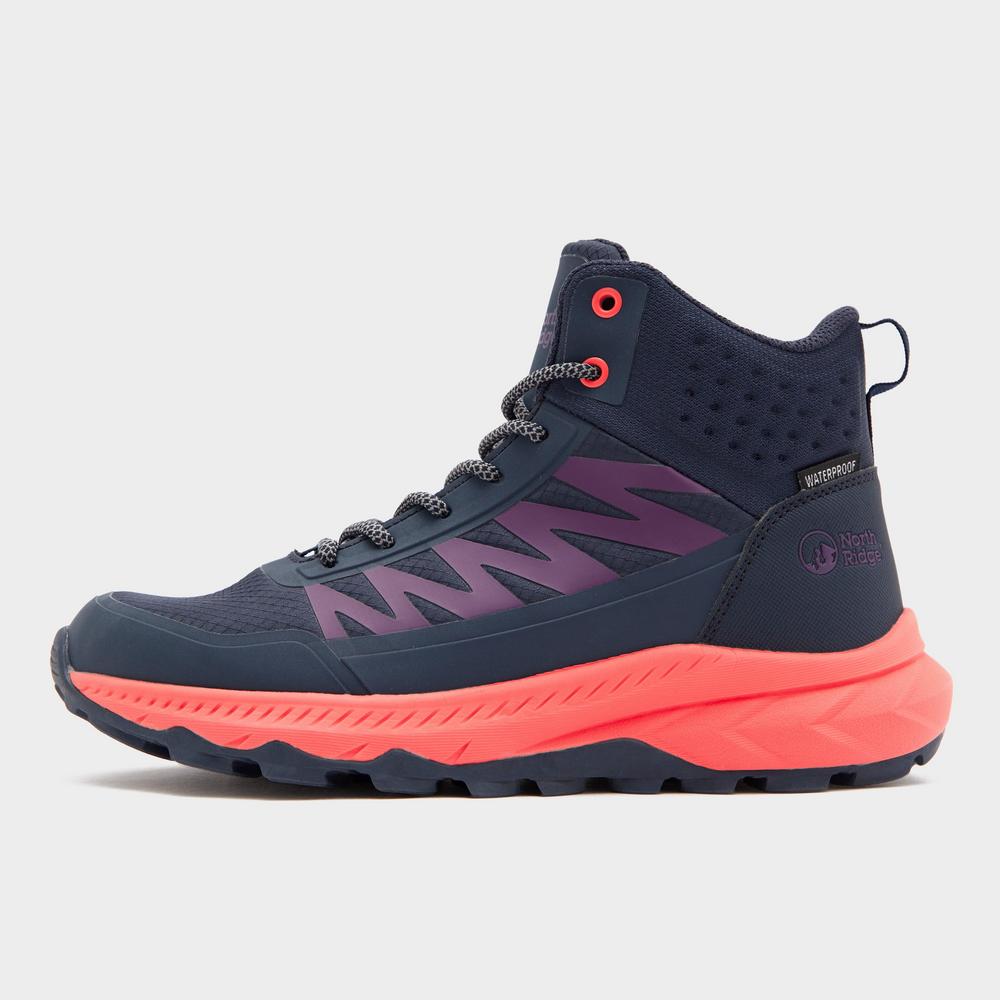
A comfortable pair of walking boots can make the difference between enjoying a countryside route and counting down the miles home. But a waterproof label alone does not tell you whether a boot will suit your feet, your usual terrain or the way you walk. Fit, socks, grip and care all deserve a place on your checklist.
This guide uses the North Ridge Women’s Harlow Mid Waterproof Walking Boot as a starting point for choosing and looking after women’s walking footwear. You’ll also find practical advice on related clothing and equestrian footwear, so you can choose kit for the activity rather than the label alone.
What to look for in a women’s walking boot
Start with the walks you actually enjoy. A gentle circuit on maintained paths places different demands on footwear from a long day over uneven ground. Consider how far you normally walk, whether your routes are muddy or rocky, and how much weight you tend to carry.
A mid-height boot covers more of the ankle than a low-cut walking shoe. That can feel reassuring, but it does not guarantee a particular level of stability or prevent injury. The shape of the boot and how securely it fits your foot matter just as much when choosing footwear.
Look closely at the sole, too. Tread patterns vary, and no sole grips every surface equally well. When shopping, consider the conditions you encounter most often and take particular care on wet rock, smooth paving and loose ground.
Understanding the North Ridge Harlow Mid’s features
The Harlow Mid is a women’s mid-height walking boot with a waterproof membrane, a padded collar and protective toe and heel rands. North Ridge also describes it as breathable and says its upper includes recycled material made from 1.35 plastic bottles.
Here’s what those details can mean when you’re comparing boots:
- Waterproof membrane: Designed to help keep water out, though water can still enter over the top of the boot.
- Toe and heel rand: These protective areas help guard against abrasion where boots may meet stones and other rough surfaces.
- Padded collar: Cushioning around the ankle area can make the collar feel more comfortable, depending on how it fits you.
- Breathable design: Breathability aims to help moisture escape, although comfort will also depend on socks, conditions and activity.
- Recycled upper content: The stated use of material made from 1.35 plastic bottles is a useful detail for shoppers considering recycled content.
These features are a useful starting point, not a substitute for trying the boots on. For more product information, see our North Ridge Harlow Mid review, then check the current retailer listing for sizes, price and availability.
How to get the right walking boot fit
Fit is personal: a boot that feels comfortable on one walker may be too narrow, too roomy or awkward around the ankle for another. Allow time to try footwear properly rather than judging it from a quick glance at the size label.
Try boots with your walking socks
Wear the socks you expect to use most often. Thick socks take up more space than thin ones, so changing socks after buying boots can noticeably alter the fit. The socks should sit smoothly, without folds that might rub.
It can also help to try boots later in the day, when your feet may be slightly swollen. Stand up in both boots and check that your toes have room to move without your foot sliding around inside.
Walk, turn and check downhill movement
Walk around indoors on a clean surface. Your heel should feel reasonably secure, and the boot should not squeeze the sides of your foot. If possible, try an incline: on the way down, your toes should not repeatedly strike the front of the boot.
Lace the boots firmly enough to hold your feet, but not so tightly that you create pressure or numbness. Adjusting the laces can improve the feel, though it won’t fix a fundamentally unsuitable shape. Check the returns policy before wearing new footwear outdoors.
Waterproofing, breathability and wet-weather walking
A waterproof membrane is useful for damp paths, wet grass and showers. It is not a promise that your feet will remain dry in every situation. Deep puddles or streams can let water in over the collar, while sweat and damp socks can make the inside feel wet even when rain has not entered through the upper.
For wetter walks, consider how your trousers sit over your boots and carry spare socks in a waterproof bag. Gaiters can be helpful for reducing debris or splashes entering from above; choose a pair that fits your footwear and check how it attaches before setting off.
After a wet outing, remove any loose insoles if the manufacturer’s instructions permit and let the boots air naturally. Avoid putting them directly against a radiator or open fire, as intense heat can damage footwear materials and adhesives.
Choosing socks and preventing rubbing
A well-fitting sock should cushion comfortably without bunching at the toes or heel. Walking socks come in different thicknesses, so try a few options with your boots rather than assuming that the thickest pair will be best. If a thicker sock makes the boot feel tight, switch to a thinner one or reconsider the fit.
Build up time in new footwear gradually. Start with a short local walk and pay attention to any hot spots before planning a longer route. Carrying blister plasters and a spare pair of socks can be sensible, but persistent rubbing or pain is a reason to stop and address the fit rather than push on.
Picking footwear for different routes
For familiar park paths and short countryside walks, comfort and a secure fit may be your main priorities. For longer or more uneven routes, think carefully about the sole, the support you prefer and how the boot feels as your feet tire. Try to match the footwear to the most demanding ground you expect to encounter.
Weather and ground conditions can change quickly in the UK. Check the forecast, plan a route appropriate to your experience and carry suitable extra layers. Waterproof footwear is only one part of staying comfortable outdoors; it does not replace good planning or careful footing.
If you’re deciding whether the Harlow Mid belongs on your shortlist, revisit the Harlow Mid walking boot review alongside a check of fit and current product details.
Related alternatives: choose kit for the task
The following products are related to outdoor or active wardrobes, but they do different jobs from a waterproof walking boot. They are not like-for-like substitutes for the Harlow Mid. Use the links to explore the items relevant to your own activities.
Equestrian footwear
The Moretta Women’s Alma Jodhpur Boots are an equestrian footwear option. If you spend time around horses as well as walking, you may want separate footwear suited to each activity. Compare fit and the requirements of your riding or yard work rather than assuming a jodhpur boot offers the same walking features as the Harlow Mid.
Clothing for active days
The Sweaty Betty Women’s Breathe Easy Running T-Shirt is a running top, not an alternative to walking footwear. A suitable top can, however, be part of a comfortable active outfit; consider fit and how it works with the layers you already own.
Similarly, the Sweaty Betty Women’s Power Pulse Bra serves a different purpose. When choosing a sports bra, prioritise a secure, comfortable fit and support appropriate to your activity.
For casual layering, the Sweaty Betty Women’s Revive Crew Neck Sweatshirt is another separate clothing option. Check how any sweatshirt fits under your outer layers, and choose clothing for the weather and intensity of your walk.
The Sweaty Betty Women’s Revive Boxy Shorts are an option to consider for casual wear. As with any shorts, think about comfort, freedom of movement and the conditions before choosing them for an outing.
Cleaning and caring for walking boots
Regular care helps you inspect your footwear and keeps dirt from building up. After a muddy walk, let loose mud dry enough to brush off gently, then clean the boots according to the manufacturer’s guidance. Pay attention to the sole, where packed mud can obscure the tread.
If the care instructions recommend a footwear cleaner or water-repellent treatment, choose one compatible with the upper materials and follow its directions. Treating an outer surface is not the same as repairing a damaged waterproof membrane, so investigate persistent leaks rather than assuming a spray will solve them.
Dry boots naturally in a ventilated place, away from direct heat and strong sunlight. Once dry, store them somewhere cool and dry rather than leaving them damp in a bag. Check the soles, laces and protective areas periodically for wear, especially before a longer trip.
How to judge value before buying
Price is only one part of value. A boot that suits your foot and the routes you walk is likely to be a more useful purchase than one chosen on discount alone. Check the current price, returns conditions and available sizes, then compare the features you genuinely need.
If recycled content matters to you, the Harlow Mid’s stated recycled upper material is worth noting. It is one aspect of a product’s impact rather than a complete picture, so consider durability, care and how often you expect to use any footwear too.
Ready to narrow down your kit? Explore the linked reviews for the Harlow Mid and the related products, then choose footwear and clothing that fit your activities, your budget and, most importantly, you.